Friday, June 16, 2006

Some Bermuda Pictures

The sun is setting over St. George and the anchorage is filled with boats waiting for a good opportunity to continue their voyages. Some, like us, are going to Horta in the Azores, others are en route to the United States or the Canadian East Coast. There are flags from Britain, France, Denmark, Germany, St. Kitts/Nevis, flown on sloops, yawls, ketches and even schooners of all sizes.


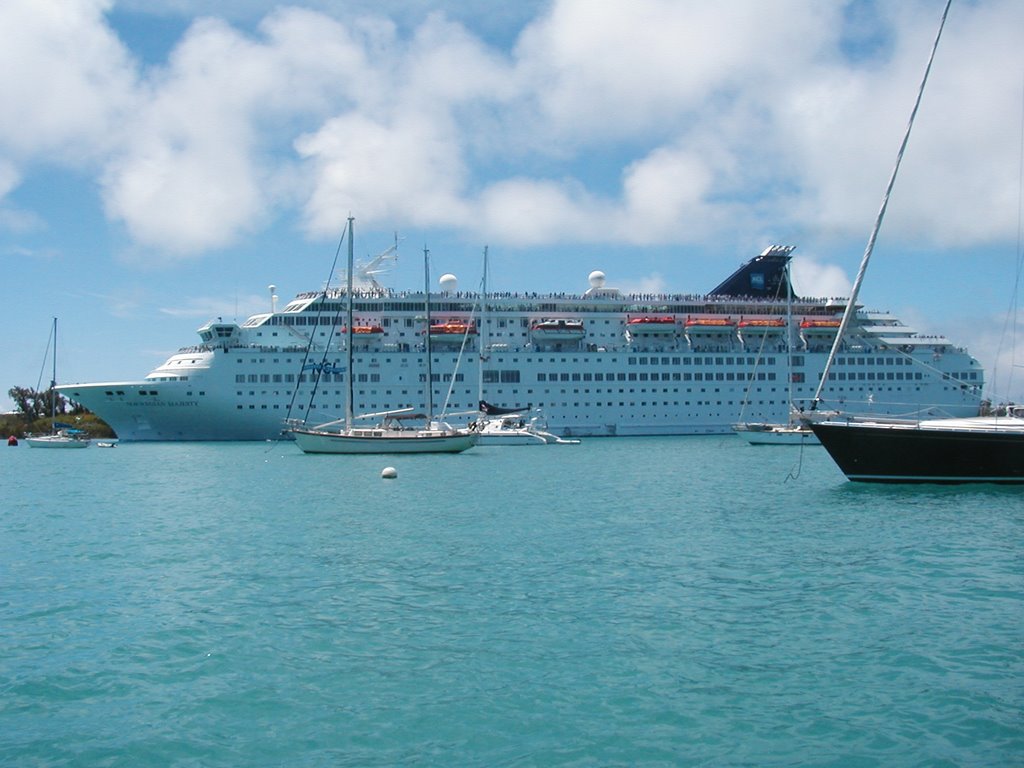
Small cruise ships also moor in St. George (as in only ten storeys or so high). They are one of the reasons that Bermuda Radio monitors all arrivals and departures - no other vessels is going to be able to transit the main cut into the harbour when one of these is going in or out.


These dinghies were racing out of the East End Mini Yacht Club (in the pink building), through the cruising boats and across the harbour. They looked as if they were thoroughly enjoying themselves.


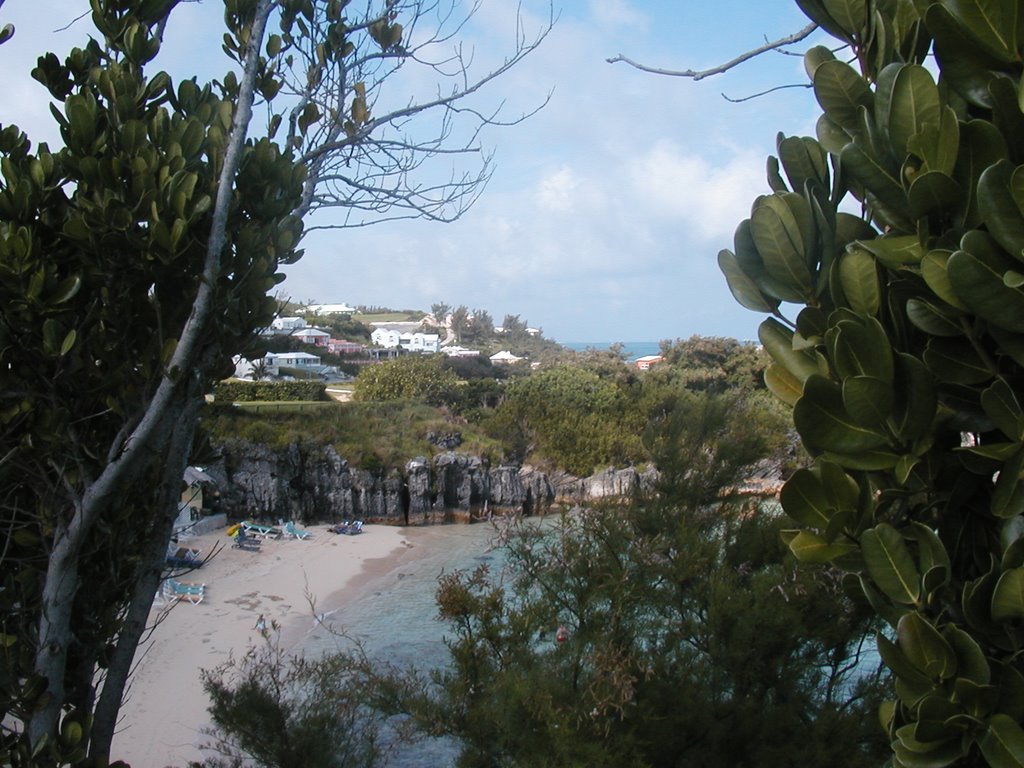
From St. George we walked to Fort St. Catherine. On the way we passed beaches and there was a golf course that the roads ran through. The road going up to the Fort overlooked this small beach and gave us a different view of the other roads we had walked along.


All kinds of people ride scooters - all ages, shapes and sizes. Bermudans on their scooters seem so comfortable that it looks as if they were born riding them...


In the middle of this picture is one of the Fitted Dinghies, with its long bowsprit, large sails and low freeboard (sides). Six is the standard number aboard, necessary to keep the boat as level as possible and bail when needed - which seems to be often.


Downtown in Hamilton, capital of Bermuda, on a Saturday morning. There are lots of cars and scooters on the streets, and pedestrians on the sidewalks. People are out shopping and looking; for the young people we saw it seemed to be a "see and be seen" kind of day and place.

Working on the boat in Miami

The sun is setting over Biscayne Bay, as we look out from Hurricane Harbor. After working away , this was the part of the day which we most often enjoyed, watching the sun set and the birds and boaters settling in for the night.


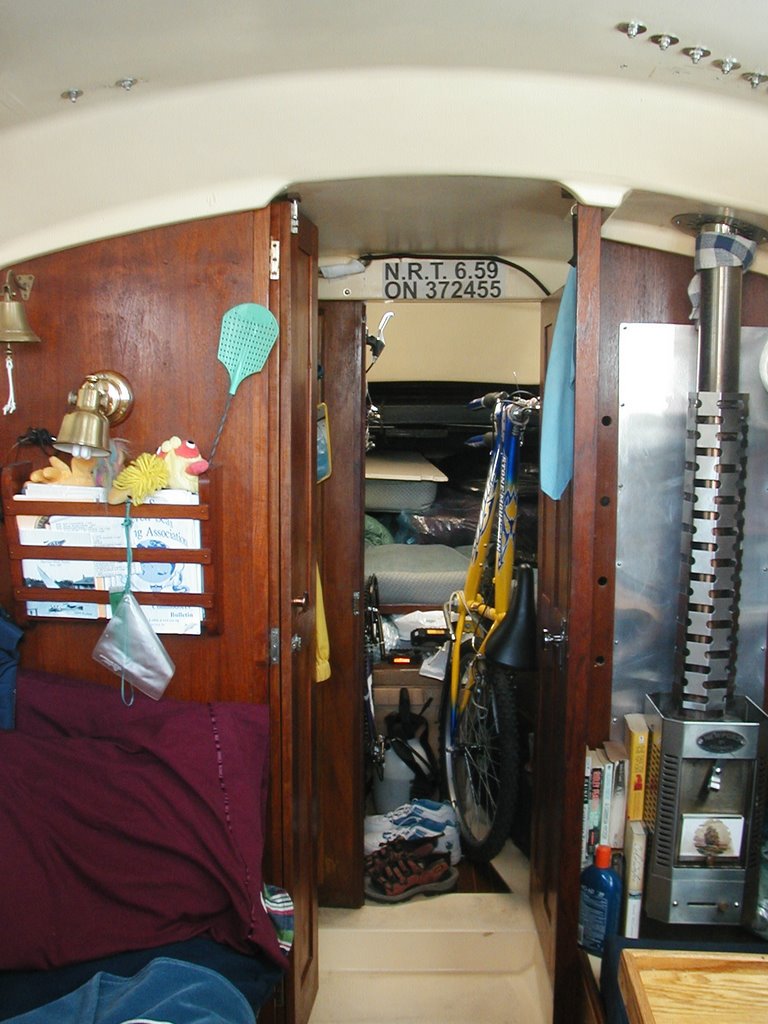
The interior layout of our boat has been changing as we travel. Here you can see part of the starboard side, complete with fireplace, bin behind seat for supplies we want ready to hand while voyaging, food hammock and ventilation holes in the lockers and bulkheads.


Further aft on the starboard side: the table is tied back for traveling and has a storage area underneath it for larger pots and pans. It serves as our nav table while underway. Beside it the cooler has been set into the shelf; you can catch a glimpse of the potholders we had heightened to hold the pressure cooker. The curtains covering the outboard bin are meant to contain any implement trying to leave its normal place...


In the middle, the vee-berth is packed and ready to go, bicycles upright on either side and miscellaneous gear farther forward. The berth on the port side is made up for travel, with the lee cloth lying across it ready to be put up.


Leaving in the evening, the wind finally favourable - Key Biscayne is behind us as we motor out the channel and get ready to set our sails and wind vane on our way to Bermuda.

Bermuda

We knew that Bermuda was nothing like the Bahamas before we even got there. As you approach the coast by boat, about thirty miles or so off, you are expected to radio in to Bermuda Radio. They take information about your boat - type, size, equipment, number of people, expected time of arrival outside St. George’s Harbour. And they follow up - if you do not radio that you are at the entrance to the harbour at the time estimated, they call to ask for your current position and a new ETA. We were beating up the coast when they called to find out why we were not requesting permission to enter the harbour yet. If you do not radio in, they will call you - with a description of your vessel and your position. From their position on top of the hill overlooking St. George's they watch the coasts and monitor vessels arriving and departing by radar and radio. Immigration and customs are businesslike and pleasant, and you begin to learn about Bermuda as they fill out the paperwork and give you official permission to stay for three weeks.

By the time we leave we will have spent close to three weeks in Bermuda. They have been weeks of contrast - with weather ranging from rain and wind gusting up to thirty-five knots to sunny days with wind between five and ten knots - but far fewer of the latter. The island is lush and green - but water is a scarce commodity. Many of the islands’ houses are built over water tanks, which collect the water when it rains and stores it for their occupants’ use. Lack of rain means that they have to buy water, and they are not encouraged to buy too much. There are boats all over the place - moored in little bays and inlets, docked at marinas and clubs - and many Bermudans spend a lot of their time on, in and around the water, but boat parts are very expensive in the local marine stores and must add considerably to the cost of owning a boat. But then, many other things are more expensive here than we have been accustomed to - the Bermudan dollar may equal the U.S. dollar, but you spend them at twice the rate for basic food and transportation. In spite of that we plan to come back, to sample more of all the things there are to see and do here.

And we have managed to enjoy seeing and doing a variety of things. We went to a cricket match at the St. George’s Cricket Club, and enjoyed not just the match but the hospitality of the club members. For those of you who understand cricket: the match was 48 overs a side, and after a slow start the batsmen went after runs aggressively, hitting singles and fours and a few sixes. The home side won, but not until the last over of the 48, and then by three - because the batsman hit a four. It was a real family event, and both sides were fielding their young teams which meant that we saw a very good thirteen year old bowler and a couple more who were probably not much older. One of the younger players scored 108 before he was out - he would have been happier if he had not been clean bowled. It looks as if cricket is alive and well in Bermuda.

We happened to read about the Fitted Dinghy races, which are held every summer. Different clubs campaign boats in the event, and it is sailboat racing not quite like you’ve seen it before. For one thing, the boats do not have to end the race with the same number of crew they start with, and once you’ve seen the boats and talked to those involved you understand why. This is a one-design class - and what a design. Picture a small boat with low sides, a plumb bow (almost straight up) and a long bowsprit designed to carry lots of sail. Then think about the fact that because its sides are so low it has to be sailed level, or as near level as possible. This explains why there are five crew plus the skipper on this small boat - and why they have to be agile to get their weight wherever it is needed very quickly. All that, and bail like crazy whenever the boat encounters a wave or wake from a passing boat. Every now and then things get a bit hairy - as they are trying to fly the spinnaker, the boat starts rocking in a gust - then the mast hits the water, the hull fills with water, and over she goes. The crew stays with the boat and waits until their powerboat comes alongside and pulls the boat up. Then they bail like mad, and climb back on board for the next race. In the races we watched two boats sank in different races - including one from the Sandys Boat Club, where we were watching the races, just after it had taken the lead. And as far as ending with fewer crew than they start with - we did not see that, since there were good winds on the day we were watching. But we were told that on light wind days, especially if the racing is close, the crew will dive off the back of the boat one by one, pushing it with their feet as they go. If they do it right, there will be small enough distance to the finish line after the last crew member has dived off that the dinghy will make it across the line before it sinks...

Bermuda is a country full of forts, built by the British to defend their possession of it. Fort St. Catherine near St. George has been restored and has dioramas illustrating parts of Bermuda’s history, a self-guided tour through parts of the fort and videos. We walked there past beaches and houses and a very hilly golf course; the beaches are pinkish, but the tourists on them were mostly even pinker. Other days we went into Hamilton, and visited the Bermuda National Gallery and the Crisson and Hind Fine Art Gallery - the first had a good juried exhibition of local artists as well as some historical pieces; the second specialises in beautiful carvings by the Shona Master Fine Artists of Zimbabwe, done in very hard stones using hand tools. There we were lucky enough to spend some time with Dusty Hind, who is passionate about the works he sells and the artists who create them. Unfortunately (or fortunately, there being no space for carvings) we had to spend our money at the marine stores, also in Hamilton, instead. Talk about sticker shock - prices are twice to three or four times what they are in the United States.

Our bus trips took us on narrow, hilly, winding roads past colourful houses and rocky shores cut into by small coves and bays, some with beaches. The cars here are small, and there are scooters everywhere ridden by Bermudans of different ages, sizes and shapes. You can easily tell the Bermudan from the tourist on a scooter - the Bermudans look very comfortable. The tourists, on the other hand, tend to look a bit tense, especially as they are overtaken by a pink bus on a narrow road. There are a few bicycle riders on these roads with no shoulders, relying on the civility and kindness of Bermudan drivers in tight situations. There are places where there are no sidewalks either - it looks as if the original road was just too narrow to allow them to be built now.

There are many roads we have not travelled, many interesting places we have not been yet. So we plan to be back, passing through again and pausing long enough to visit and enjoy Bermudan hospitality a little more.

Monday, June 05, 2006

George Town and Other Pictures

Some of you who cruise around Lake Ontario may have seen John and his Alberg 30, Joy B, much modified for comfortable cruising. Here she is racing in the In The Harbour Race at the George Town Cruisers' Regatta, where she placed a very respectable fifth.


Winner of the B Class and first overall was Lollygag, a Canadian boat cruised by Matt and Madeline from Cathedral Bluffs Yacht Club, Toronto. They did not live up to their name and were across the line ahead of the boats in their class and in front of some of the A Class boats as well.


Cruisers Regatta Week also features dinghy races, with dinghies of all sizes sporting many different kinds and sizes of sails. In the end, waterline and sail size had a lot to do with who won...


The dinghy dock in Lake Victoria in George Town was almost always full when we went there. This was early evening on the night of the Regatta Variety Show - when we came back after, there were two or three rows of dinghies behind each of these.


The sun is setting over the anchorage in George Town's Kidd Cove after another windy day, as we prepare for another rolly night...


On the other side of the islands which shelter the George Town's Elizabeth Harbour lies the Exuma Sound. When the wind blows in from the east you can walk along the beach and watch the waves coming in.


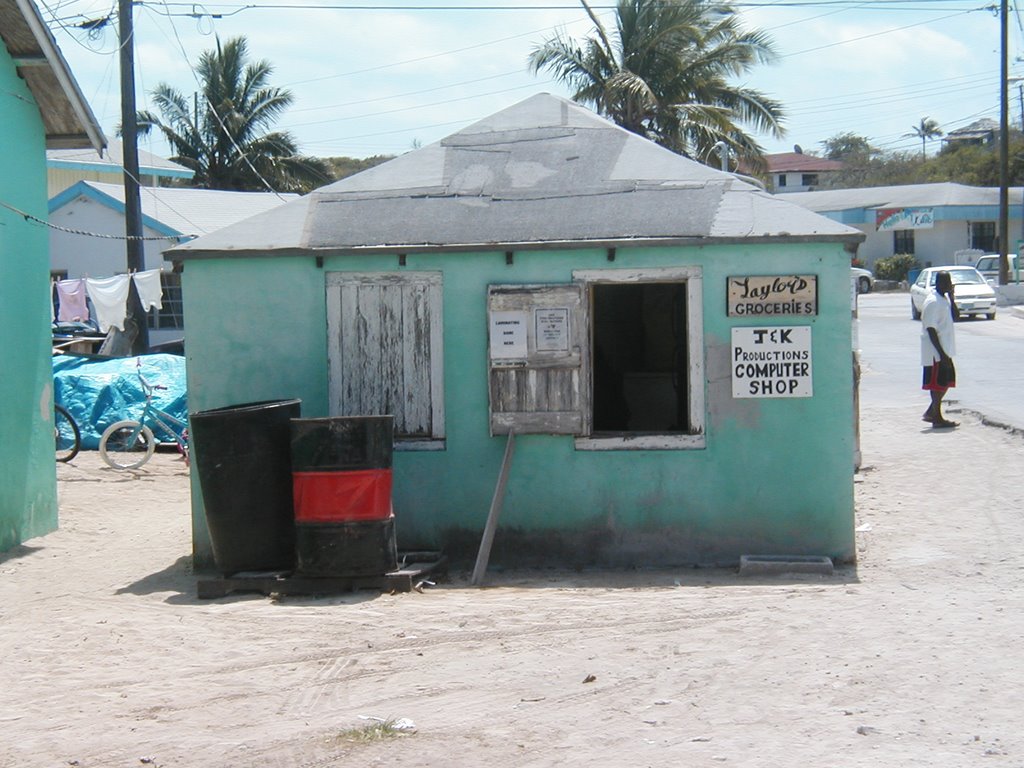
This little store was where we found the most reliable internet connection, at very reasonable rates. The young man who runs the computer side of the business plans to expand and improve as money allows; the grocery store will soon be moving next door and this building will be devoted to computers and internet access. He was pleasant and hard-working - we wish him the best of luck.


On top of Monument Hill stands this beacon, showing the way to Elizabeth Harbour and George Town. We enjoyed anchoring off here, and using the trails across the island to visit the shore on the Exuma Sound side.


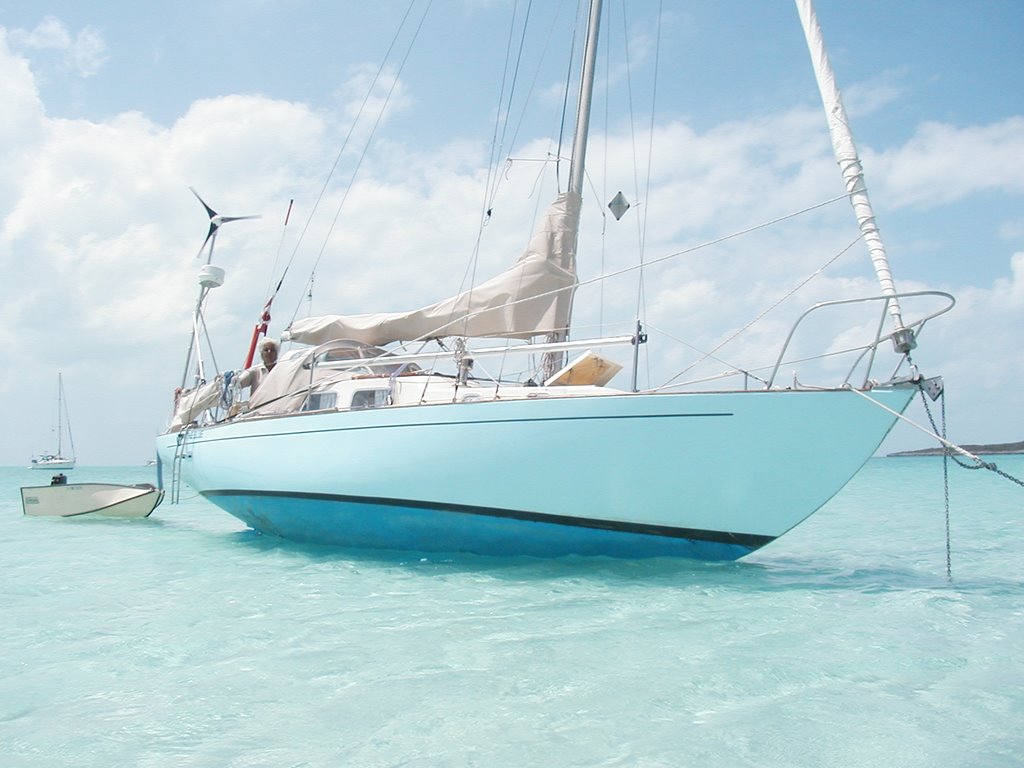
While in Black Point, Exumas for the second time we needed to replace the zinc on our prop. So we followed the suggestion of a friend (John on Joy B) and grounded Into The Blue on sand at half tide as the tide was going out. Then we waited for the tide to go down enough for Richard to stand and work, rather than swim. And while we were there we cleaned up the waterline and did a few other things as well...


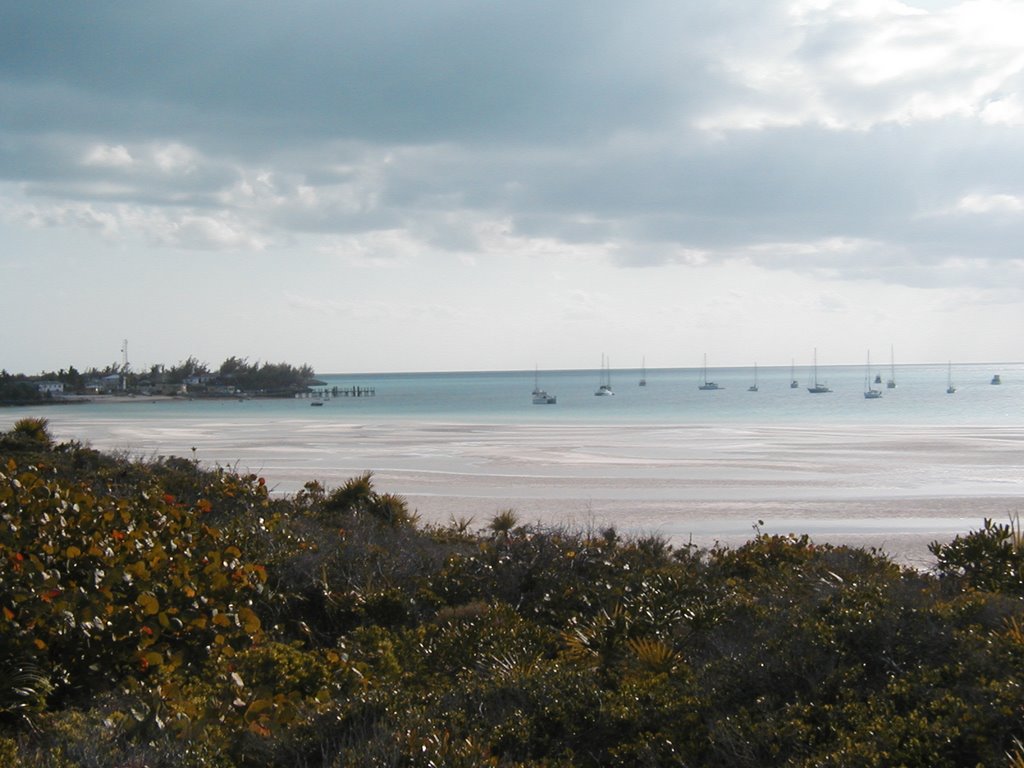
Looking out across the sands to the harbour at Black Point Settlement on Great Guana Cay, with the tide coming in to cover the shallows. Many cruisers stop here - there is a good grocery store, a laundromat, a small marine supply store, and good local restaurants. Lorraine's Cafe is a hub of activity, providing information, internet access, a book swap, local bread and lunch and supper for the hungry.

Miami, then to Bermuda

Back to Miami

The first week of April saw us on our way back to Miami, with a brief stop in Warderick Wells to enjoy a swim and snorkel off the beaches and a hike across the island from the “bank” side to the “sea” side. Then we set sail across one bank, across the deep waters of Tongue of the Ocean that divide them and across the bank on its west side to North Cat Cay. Winds were light and sometimes blowing from the direction we were trying to go in, which made the journey a little longer than we had anticipated - such is sailing. After we crossed Tongue of the Ocean the wind shifted - it decided to blow from the direction we were going in. That had us tacking back and forth, and we decided stopping for the two nights we were on the bank and continuing on during the day was safer than sailing on in the darkness. Our second stop was just off North Cat Cay on the western edge of the Bahamas, where we arrived late and spent a bumpy night. That meant being up early was no challenge, and as soon as it was daylight we went through the narrow cut there and headed for the Gulf Stream and Miami. By that evening we were in U.S. waters, entering Biscayne Bay through the cut off Cape Florida in time to anchor for the night in the Bay. Next morning we called in, welcomed personnel from Homeland Security on board for a brief visit, and replaced our Q flag with the Stars and Stripes. By that evening we had had our passports officially stamped, and we were on our way to visit family. Then it was time to settle in for some more serious work to get ready for our next voyage.

Working on Into The Blue - Some More.

Most of April and half of May saw us hard at work. Our largest project was putting together a Jordan Series Drogue, something we decided we would rather have to help us in very heavy weather instead of wishing we had it should we ever need it. We saved some time by ordering a Sailrite kit with the one hundred cones we needed already cut. Then it was just a matter of cutting and sewing three hundred pieces of tape on to the one hundred cones and sewing the cones together; attaching those pieces of tape to umpteen feet of rope (each piece of tape knotted top and bottom through the rope); making the necessary splices; and attaching stainless steel brackets to the stern to fasten the drogue to. Other jobs were smaller - working on improving radio transmission, creating covers for the bins in the main cabin, raising the port berth in the main cabin to create chart storage underneath it, making sure that we can fasten down the floorboards and ice box lids should we need to, making baggywrinkles for our aft shrouds to prevent the mainsail from chafing when we are going downwind (bright yellow for now until the sun mellows them, they are nice and cheerful), and generally doing whatever we could think of to increase comfort and safety while under way. At the same time we were reprovisioning and stowing, bit by bit, and the boat was sinking lower and lower on her water line.

We spent days at a time in Hurricane Harbor, surrounded by large houses and protected not just from the weather but from much of the traffic on Biscayne Bay. Any weekends we were there we were joined by a few other boats, and saw many others tour through, but generally there was little activity during the week. When we wanted to spend time with family, we left the boat on a mooring in Crandon Park Marina and locked our dinghy into the dinghy stand. When we just needed to go to the grocery store then we spent the day in No Name Harbor, and biked in from there - Richard also made a couple of long bicycle trips into Miami from there, to get work done or pick up marine supplies.

As the middle of May drew near, we took stock of what we had done and decided it was time to go. Boat work never actually finishes - you just get used to doing it wherever you happen to be. But you do try to do the larger jobs where it is most economical, and hope that nothing too big sneaks up on you anywhere else. So - supplies bought and stowed and plans made, we lingered just long enough to celebrate Mother’s Day with family, including one daughter. Then we waited through thunderstorms and northerly winds, until the day the weather changed and the winds blew out of the south and the Gulf Stream showed its friendly face...

Bermuda Bound.

We set off on a friday evening, leaving Cape Florida behind us as the sun was going down in the sky. The winds were light and stayed light for the next four days, but at least we had the Gulf Stream to help us northward past the Bahamas. Then the winds grew brisker and we adapted to living life more or less at an angle. We tuned in to Herb on South Bound II to help us find friendly winds and currents and avoid any heavier weather. The days passed quickly, what with log keeping, standing watches, preparing meals, looking out for ships and figuring out where they were headed. We created our own routine, which suited our own sleeping habits...

When you look out over the blue of the ocean it is easy to feel that there is no-one else around. Then a freighter or cruise ship comes into view, or you hear on the net that there is another boat travelling close to you, going in the same direction. In our case there was Lapwing, a Valiant 40 - we talked to them once or twice a day on our SSB radio, comparing conditions and discussing our next waypoints. They arrived in Bermuda a day ahead of us, having decided to motor while we kept sailing, and were waiting to greet us when we got here.

Other less pleasant things remind you of the presence of man. We passed an array of things floating in the sea - from the drawers of a bureau to balloons to a yellow jerry can to plastic bottles and bits of foam to parts of crates and other wooden debris. We heard one boat radio in to the net that they had passed a semi-sunken powerboat, bow bobbing along above the waves.

Other creatures that travel and live on the sea are less intrusive. You have to take the time to look for the Petrels that skim low over the water, searching for food. The Portuguese Man-of War jellyfish sail quietly past. The dolphins catch your attention with the sound of their breathing, sometimes off in the distance, sometimes right by the boat. Most of the time they are in groups, but sometimes there is just one swimming along by itself. Two days in a row a Tropicbird came to look us over and try to land on our mast. The rope for the topping list, snapping around, and the array of things on top of our mast defeated him. He sounded indignant as he flew away.

A week and a half later we were approaching Bermuda. Since it is a set of islands surrounded by reefs, the approach to Bermuda demands respect and attention to charts and navigation. And once you are thirty miles or so off the coast every boat is expected to call in to Bermuda Radio on 16, and give details of their position, the size and type of vessel, the number of persons and safety equipment aboard and their estimated time of arrival off the cut which leads in to the harbour in St. George. Should you fail to do so, Bermuda Radio will hail you - and they will follow up should you not arrive at the time given. Once you are close to the cut, they will let you know whether you can enter or must wait for cruise ship traffic; once inside they guide you to the dock where you tie up to clear customs - or ask you to anchor off and wait. All very different from the Bahamas - and these are not the only differences we have been finding. But that is for next time...

Sunday, March 26, 2006

Pictures from the Exumas

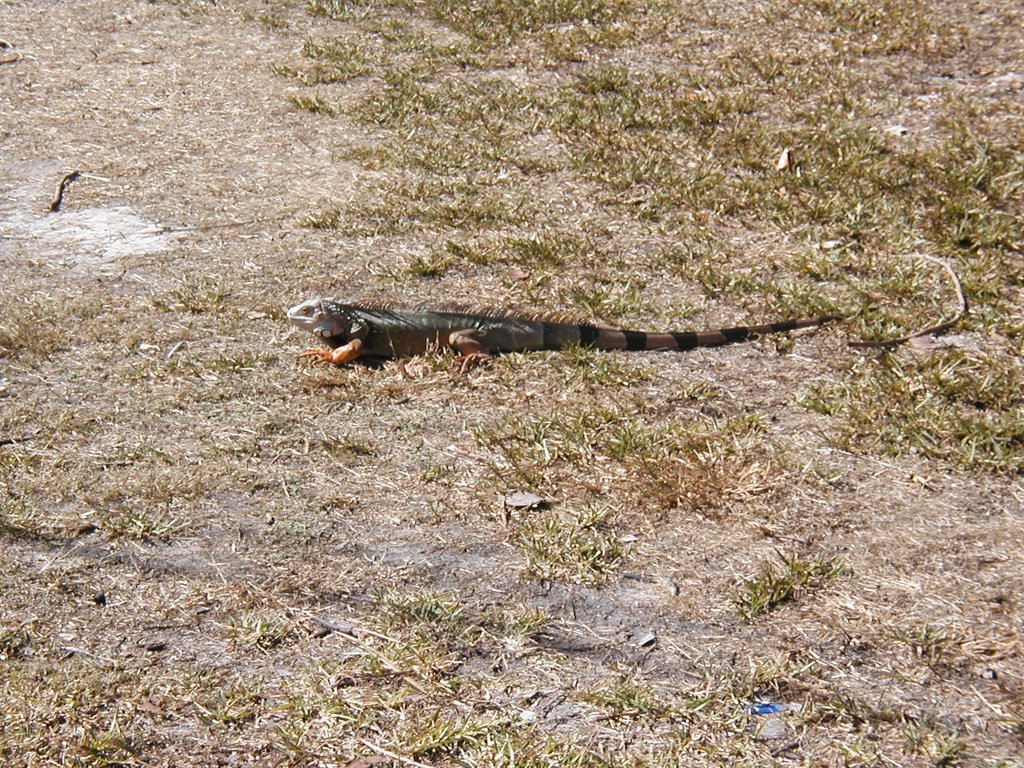
This is a quiet day in the anchorage at Allens Cay in the Exumas. Allens Cay is inhabited mainly by iguanas, who sun themselves on the beaches and nibble on the seaweed washed up. The water is beautiful and clear - you can see the sandbar in the middle underneath it. The building in the background is a ruin; no person lives on the cay itself. The building is visible because almost all the trees are small - there is not much fresh water or soil here.


Warderick Wells, a part of the Exuma Cays Land and Sea Park, is fascinating. Once forested, it was stripped of its trees by the 1800s. Under the care of the Bahamas National Trust the island is being allowed to regenerate itself. Among its inhabitants, this little warbler, which flits past close to people and sits on the hands of those wishing to feed it without any fear.


This inhabitant of Warderick Wells is usually seen in motion, racing across the paths. This one, however, was sunning himself and did not care to move.


Yet another inhabitant of Warderick Wells, the Curly-Tailed Lizard likes to sun himself on the rocks which make up much of the terrain here.


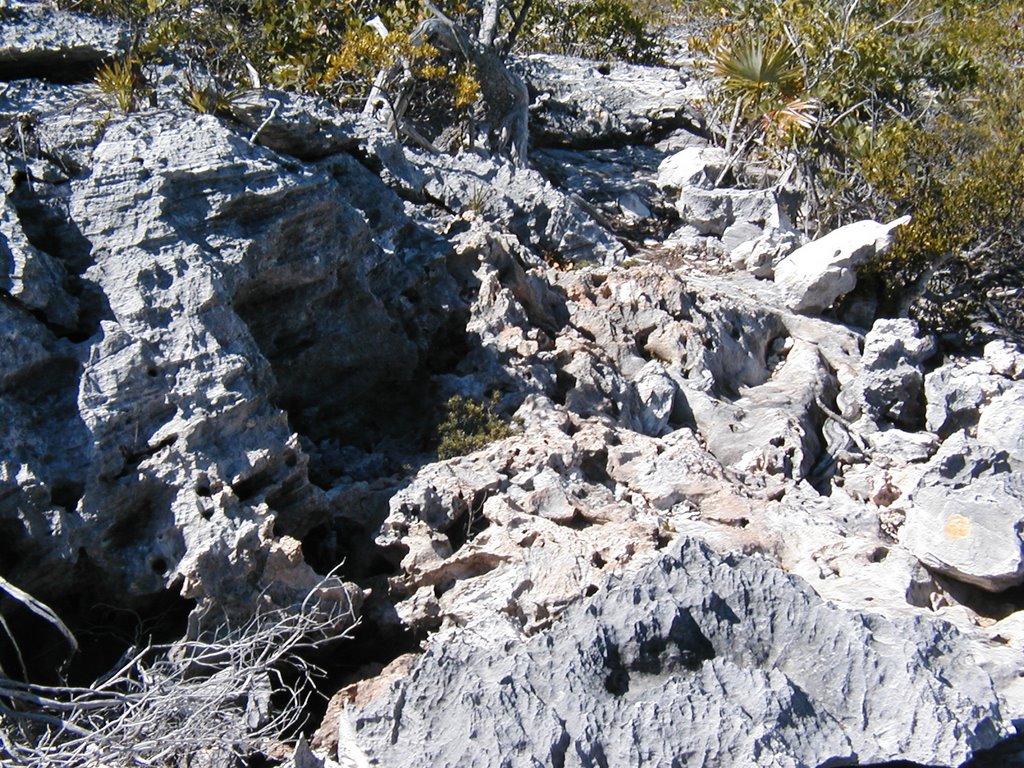
Many parts of the trails we walked over looked like this, made up of very porous rock formed from the sand. They sometimes shift as you walk on them, and make music-like noises as they hit each other.


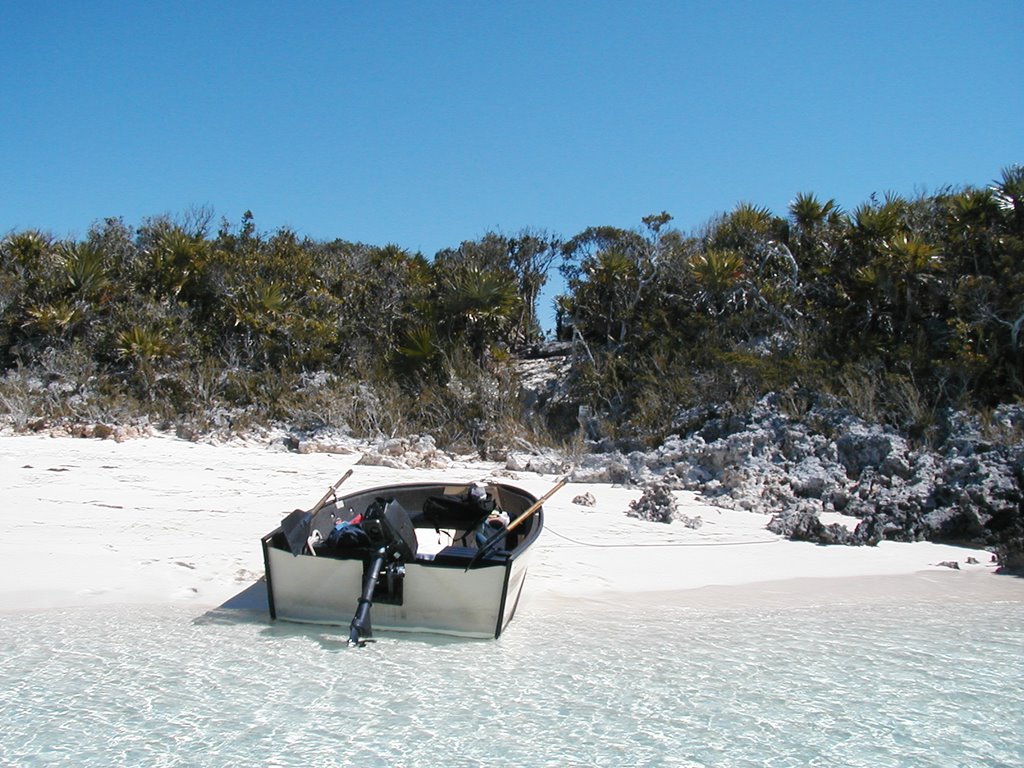
We did find a secluded beach, with beautiful white sand and no current, a great place to dip into the water. It is tucked away, we're not going to say where...


Another inhabitant of Warderick Wells we met on our walks, this Mockingbird was so sure that he was well camouflaged in the trees that he did not move as we took his picture.


Former human inhabitants of the island also left their traces. This is part of the ruins of the Davis Plantation, a Loyalist Settlement built in the late 1700s. A lot of work must have gone into building these walls, now in ruins, and looking at them makes you wonder what their lives were like.


These are the swimming pigs of Big Majors Spot, an island close to Staniel Cay. We were told they will swim to your boat if you have food, but we did not put this to the test. They will certainly investigate any dinghy which arrives, with much snuffling and squealing, but they do not stay if there is no food to keep them interested.


Another one of those friendly, engaging places, Staniel Cay welcomes visitors whether they come to stay on their boats or in the cottages for rent, like these at Staniel Cay Yacht Club. The yacht club is a hub of activity for visitors, providing all kinds of things from good food to internet access to information about the surrounding area, besides the normal docking, fuel, water etc.

Travels in the Exumas

Every area in the Bahamas has its own ambience. The parts of Andros we visited were different from Great Harbour Cay, and the islands of the Exumas are different from them and from each other. From Fresh Creek on Andros we crossed Tongue of the Ocean and the Great Bahama Bank to Highborne Cay, stopping overnight on the Bank. For part of one afternoon we anchored in the crystal clear waters off Highborne Cay, until increasingly high waves and winds made us decide to head for the all-weather anchorage at nearby Allen's Cay. And there we stayed for the next five days, learning to cope with the effects of strong currents and winds (but sheltered from the high waves all around the cays we were anchored between). We learned that when both current and winds are strong and the oppose each other, the boat will dance up on her anchor and can sail it out if there is only one down. We are now much more experienced at doing the Bahamian moor, one anchor in the direction of each tidal flow and chains linked below the level of the keel.

Not that we spent all our time sitting anxiously on the boat. When the weather was relatively good we hopped into the dinghy and explored and visited. The cays around the anchorage were home to iguanas, which live protected lives there. They are large, ugly and fascinating. We watched them bask on the beaches with their heads toward the sun, nibble on seaweed and make the sand fly in front of their burrows. Almost as fascinating was watching the people who came to visit them, some brought in by large powerboats proclaiming themselves to be part of a Bahamian Adventure Tour. Most of them approached the iguanas with caution and did not linger long; some tried to feed them. The iguanas moved when disturbed but other than that largely ignored their visitors.
From Allen's Cay we travelled by dinghy to Highborne Cay a couple of times. This was our first experience with an increasingly common phenomenon in the Bahamas - the privately owned cay with a resort or marina or both on it. The marina and the beaches were the only places we could land, and walking around the island was not allowed except for guests at the marina or guest house. The marina itself was very friendly, offering a place to dispose of garbage (for a fee), access the internet (ditto), use the phone, buy groceries and fuel, and exchange books (free!). The beaches around it were beautiful, and in calm weather we saw several boats anchored off them. But the improving weather saw us moving on instead of joining them.

When we left Allen's Cay we enjoyed a good sail in brisk winds to Warderick Wells in the Exuma Cays Land and Sea Park. There we spent our first day anchored off the beach on the west side, enjoying the fact that there was no current and no need to worry about the boat riding up on her anchor. The next day we moved to one of the moorings off the park headquarters, and with brochure and map in hand began to explore the island.

The Park has been established as part of the effort to permanently preserve areas of ecological importance. The island once had forests with trees which were harvested, and for a short while had a settlement on it. Deforestation lead to erosion and changes in plant and animal life, and the settlement did not last long. Now the island is being allowed to regenerate, with the minimum of interference from humans, and visitors are asked to leave nothing and take nothing except pictures. We explored the trails, and swam off the beaches, and planned to return with snorkelling gear to look at the nearby reefs.

From Warderick Wells we enjoyed another good sail in brisk winds to an anchorage close to Staniel Cay. In the end we only lunched in the first spot we anchored in - the guides said it was an all-weather anchorage, but it was also rolly and unpleasant. The spot we moved to after lunch, off the beach west of Big Majors Spot, was much nicer. There was no current and the waters were calm. We took advantage of several days of good weather to stay there, visiting the swimming pigs, swimming off one of the beaches and dinghying to nearby Staniel Cay Yacht Club to visit the town and enjoy good food and free wi-fi access to the internet. We also saw our first Nurse Sharks and a large Ray - they also enjoy good food courtesy of the Yacht Club whenever fish are cleaned there.

We enjoyed Staniel Cay, where the yacht club brings together cruisers, cottage guests and Bahamians, and where stepping out of the yacht club gates takes you straight into the community. On the roads the most common vehicle is the golf cart, small, manoeuvrable and not too fast. They handle the narrow roads in town with ease, and you see them parked around houses, stores, church and the Yacht Club. In the Yacht Club there are always people coming and going, and the bar and restaurant are often full of visitors, mostly cruisers or cottage guests.

From there it was a short trip to a very different stop - the anchorage in the harbour off Black Point Settlement on Great Guana Cay. The only disadvantage to this anchorage is that it does not provide shelter from westerly winds; if not for that it would be easy to stay here longer than we did and enjoy the friendliness and cleanliness of the town. Life here moves at a slower, quieter pace, and there is a cluster of services very important to cruisers - laundromat, marine store, book swap, large clean grocery store, local restaurants, garbage disposal, even well water for those interested. We would have stayed longer, but there was a front approaching with strong winds and we needed a more protected place to be in when it passed.

So from Black Point we made another short hop to Little Farmers Cay. Our first night was pleasantly spent on the west side of the island, but the next mornng we moved to the more sheltered anchorage on the east side. There we dealt once again with the mix of strong currents and high winds, and practiced our Bahamian Moor techniques. Richard went ashore a couple of times on calmer days, for fish, bread and cheese, and spent time talking to some of the local fishermen. All went well, although a boat close to us dragged during the windiest night and we spent the balance of the night awake and watching ourselves and them. And then the wind died down, and it was hard to tell what all the fuss was all about. And it was time to head for George Town.

Wednesday, March 08, 2006

Pictures from Morgans Bluff and Fresh Creek, Andros

At Morgan's Bluff on Andros the mail boat comes on Wednesday evenings, and unloads and loads up on Thursdays. It brings all kinds of things, including a car bought for parts, various goods and the mail. It leaves loaded with a similar variety of things, including produce bound for Nassau.


There is a creek that runs beside the road into Nicholls Town. We saw ducks on it, and a variety of plants grew around it; on the other side of the road it looked marshy and flat.


Twice a week, the Sea Link connects Morgan's Bluff with Nassau, carrying passengers, vehicles and some cargo. She backs into the small harbour to unload, then heads back out a couple of hours later.


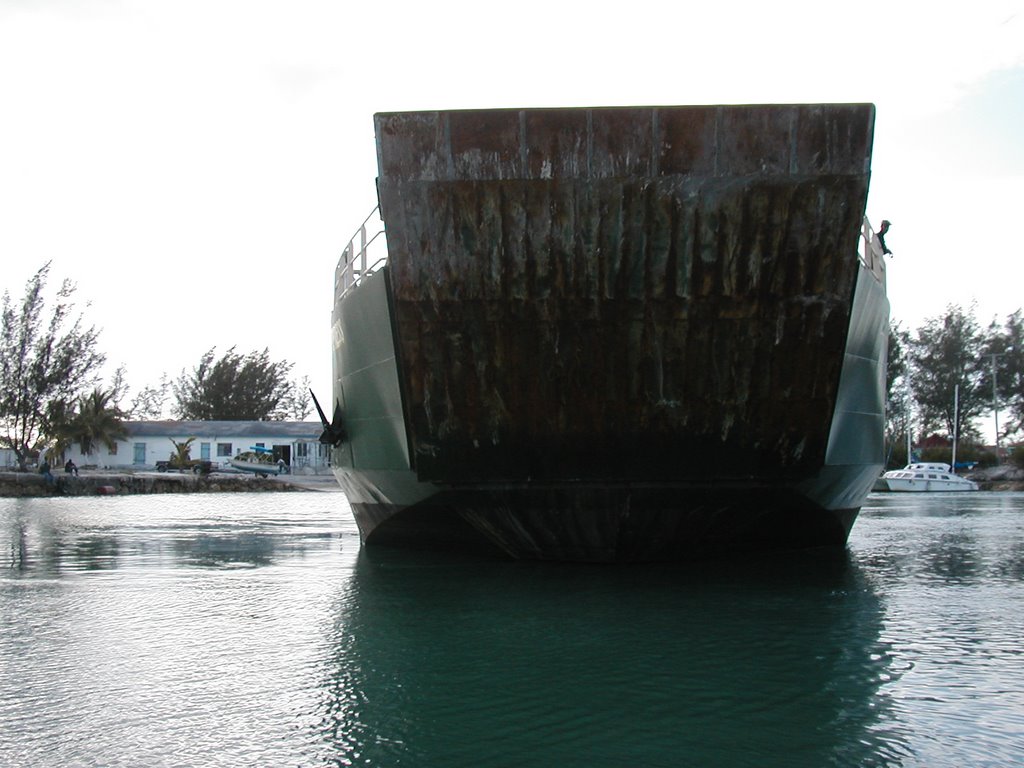
The small container ships that use the Morgan's Bluff Harbour come in bow first, and spin around on their own length inside the harbour before they leave. This is the somewhat intimidating view we had of them as they turned around.


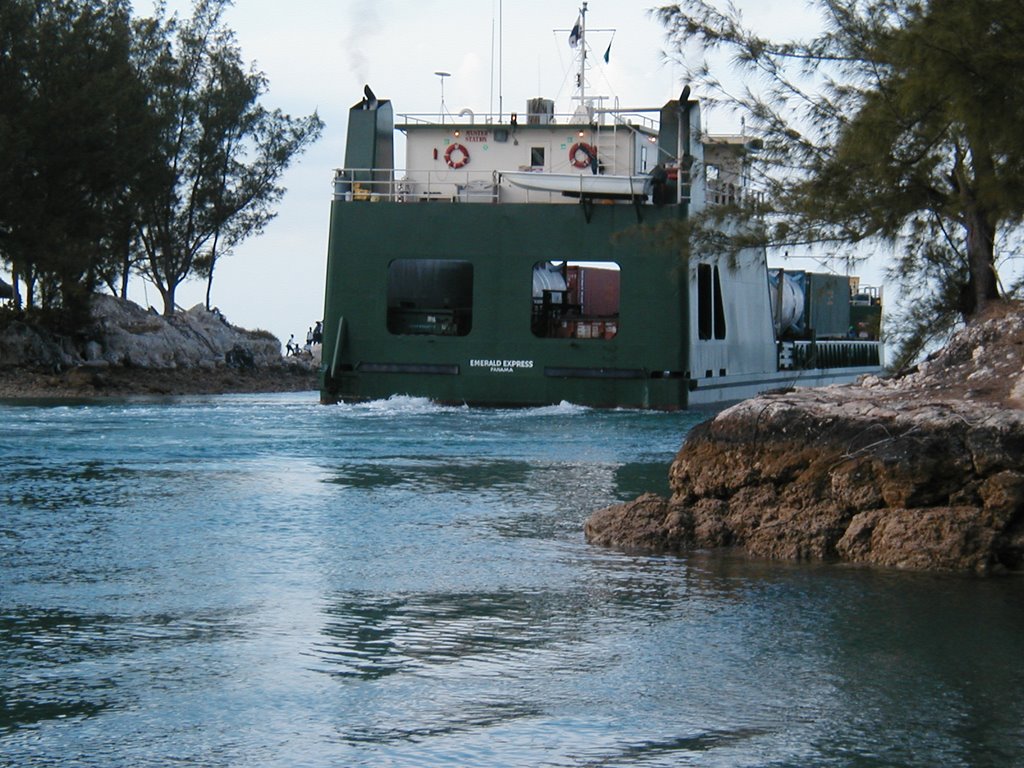
Having turned around, they pick up speed through the narrow channel as they head out toward their next destination.


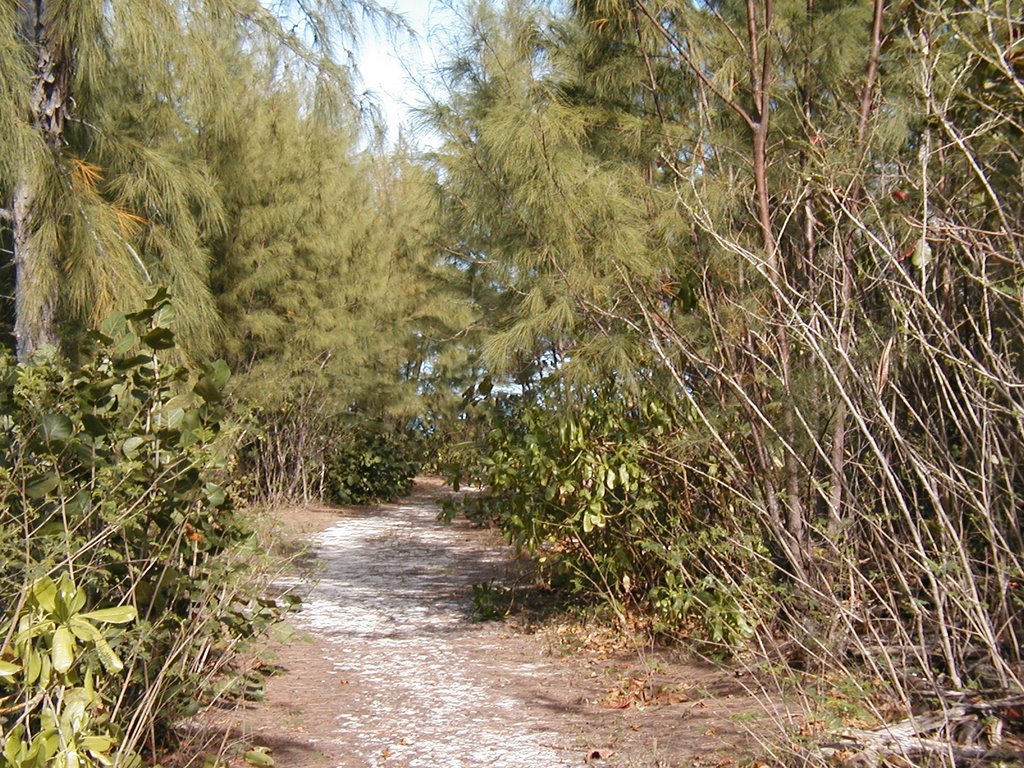
Close to the Marina in Fresh Creek this path winds from one small beach to a larger one.


The marina in Fresh Creek is named for this lighthouse which stands guard at the entrance to the creek.


In front of the lighthouse are these cannons, standing guard over the narrow entrance to the creek, probably a relic of the times when the Bahamas were much fought over.


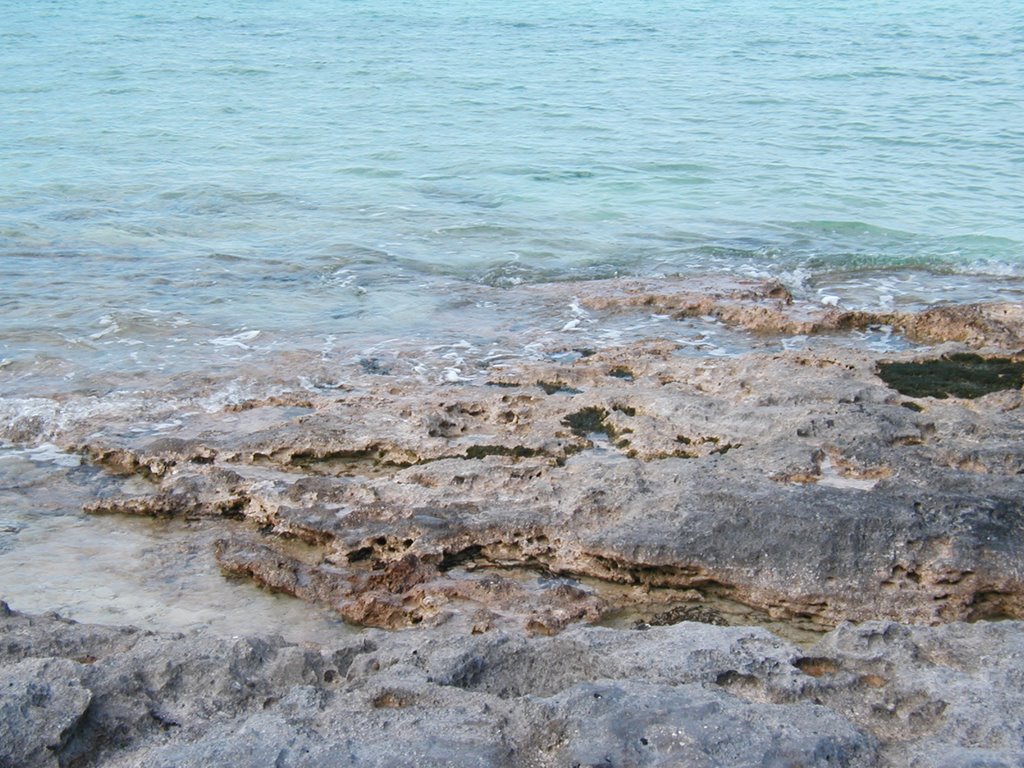
This is part of the shore off Fresh Creek, where rocks and reefs are as much a part of the shoreline as the beautiful white sand of the beaches.


Houses in the Bahamas tend to be solidly constructed and colorful. Bright blue and yellow are popular, and the schools usually seem to be yellow with green doors. This pink house looks out to the reefs from beside Fresh Creek, Andros.


The Androsia store is beside the factory where they create beautiful batiked fabrics in rich colours. The factory is small and the processes are human-driven; the only machinery we saw were the sewing machines on which clothes created from the fabrics dyed here are stitched. Visitors are welcome to see the factory and watch how the batik is created, and purchase clothing or fabric from the store.

Andros Island, Bahamas

When we arrived at Morgans Bluff on the north end of Andros, it was after a hard day of sailing and a night spent partly hove-to as we faced high wind and waves. Our plan had been to sail to Fraser’s Hog Cay to shelter from south-west winds, and then on to Morgans Bluff the next day. The winds remained south-east instead, and we learned another valuable lesson which took us straight to Andros - there are times when it is much better to stay on the banks and out of deeper water. Sailing down the bank as the sun rose brought us into the harbour at the start of the working day, as the grapefruit for export were being assembled close to the dock. We were welcomed, our lines taken, and found ourselves snuggled up alongside a concrete dock in the calm of the inner harbour.

It took a few days to realise what it means when the guidebook says that this is a commercial harbour. We spent about a week there, and during that week we saw small freighters come and go. There were the grapefruit exported to the United States; that ship came and went twice a week, and each time the forklifts raced around removing empty containers and replacing them with full ones. Then there were other small container ships, which came from time to time. The catamaran which carries people, cars and some freight to and from Nassau came and went twice a week. The mailboat, as it does everywhere else, came once a week. We met the harbour master, born in Jamaica, who came there after schooling in England via the Merchant Marine and Miami, and spoke several languages. We met some of the seamen off the ships which came in, who were curious about who we are and where we are going. We met one of the local fishermen, captain of a fishing boat, and learned from him that the small fishing boats use teams of dinghies which put out nets when they find fish, as opposed to trolling. We met other cruisers, pausing or passing through, and enjoyed swapping tales.

While we were there we walked the five miles into the nearest town, where we found very good food at a small take-out and loaves of home made bread. People talked to us while we waited for the food to be prepared, and one man pointed out the bus stop they were building for the school children, so they would not have to wait in the rain for the bus. School buses were the only buses we saw; if you did not walk or drive, you could take the local taxi for twenty dollars or so, or they would be happy to rent you a car.

Walking has this advantage - you see the countryside in a lot more detail than you would otherwise. Andros, at least the parts of it we visited, was very different from Great Harbour Cay - it had lots of fresh water. The trees grew higher there, there was fresh produce grown there, and for the first time in a while we heard the sound of the breeze sighing through the trees. Water is in fact one of the exports - huge tankers go from the outer harbour at Morgans Bluff carrying fresh water to Nassau twice a day. We saw ducks on a creek. Unfortunately, we also became acquainted with the no-see-ums, which came out to torment everyone just before we sat through the next weather front moving through the region.

The winds that accompanied that front had us bouncing a bit by the concrete dock, and we used some of our spare hose for chafe protection after one line parted. Nothing like leaping out of your berth at two in the morning to stop your boat crashing into an unyielding object - gets the adrenaline going! So once the winds and waves had died down it was not as hard to say goodbye to that dock, and set sail for Fresh Creek, further south.

Light winds made for a long but pleasant sail, until they died down to the point where we started the engine to make sure we finished the journey with enough time to anchor. At least we thought we were going to anchor - but we rapidly learned that the bottom was too hard for our anchor to hold, or even dig in. It is a little disconcerting when that piece of strangely shaped metal which has held you through winds up to thirty-five knots will only skip across the bottom and refuses to dig in at all. We went to the marina there instead.

Fresh Creek is notable for a number of things, including fishing for bonefish, the Androsia Batik Factory and a couple of good, inexpensive restaurants. We were interested in the latter two, and during the two days we spent there we walked, visited the Androsia factory, enjoyed a good meal at Hank’s Place and enjoyed the luxury of shore side showers. The Androsia factory hand produces batik fabrics and clothing, and visitors are welcome to tour the factory and see how the patterns are created. Everything is human-driven, the patterns hand stamped on to the fabrics before they are dyed by teams working over long baths. Some of the patterns are striking, and the colours used are rich and appealing. And, in the way things happen, that was where we found out where to get home-made bread in Fresh Creek.

There was a lot here we were curious about, like the lighthouse which looked more like a lookout tower with its cannons in front of it, and more trails that we could have explored. Not being able to anchor meant that the time here was shorter than we liked, but after Fresh Creek we decided that it was time to move further south and east, and visit the Exumas. We’ll talk about some of that in our next instalment of our blog

Monday, February 20, 2006

Pictures: Key Biscayne, Miami and Great Harbour Cay, Bahamas

Close to No Name Harbor in Bill Bagg Cape Florida State Park this iguana grazed calmly while we took his picture, more concerned about eating than being approached.


The gulls in Bill Bagg Cape Florida State Park were cautious but not frightened when we approached them as they foraged on the beach.


The nature trails around No Name Harbor were surrounded by trees, bushes and flowers much visited by bees and other insects, including this one.


No Name Harbor could get very crowded, especially when a possible weather window for crossing to the Bahamas combined with a long weekend. One weekend there were 35 boats in this small harbor, 25 powerboats and ten sailboats.


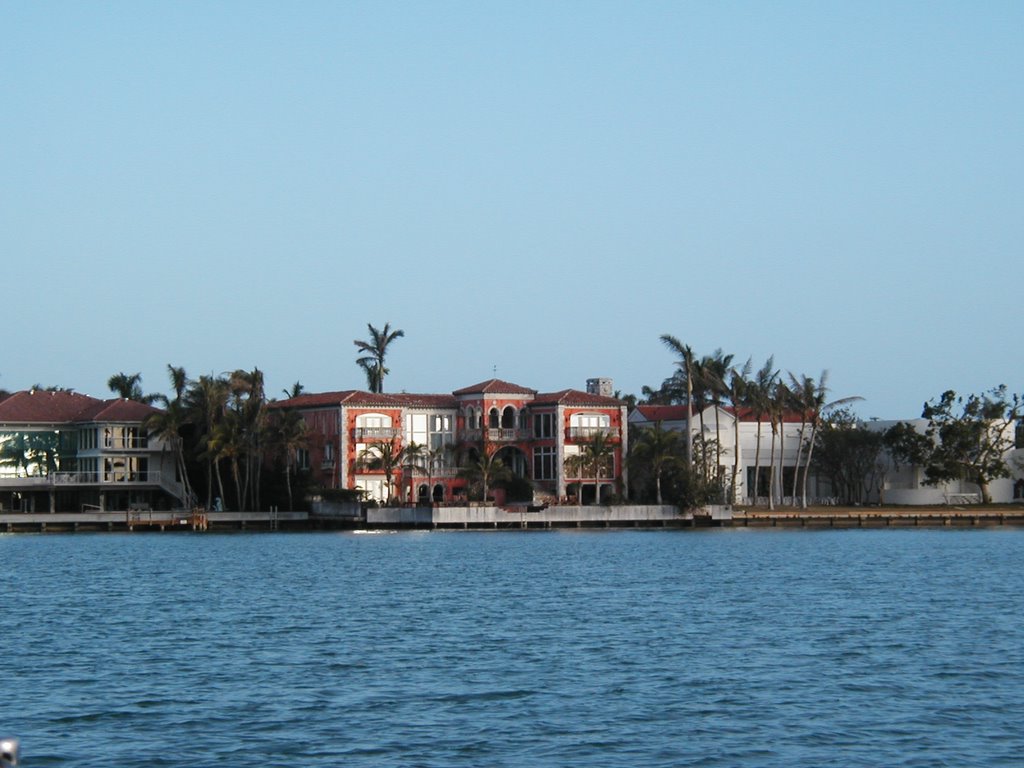
We spent time in and outside Hurricane Harbor on Key Biscayne. The scenery was dominated by large houses, each with its own style; orange seemed to be a popular colour, and the Spanish influence was everywhere.


Hurricane Harbor would probably have more boats anchored there if the entrance, between two shoals, seemed less intimidating. It provides good shelter, the holding is good (extra good if you pick up another anchor as well as your own, as we did) and it is surrounded by obviously upscale houses, some of them beautiful.


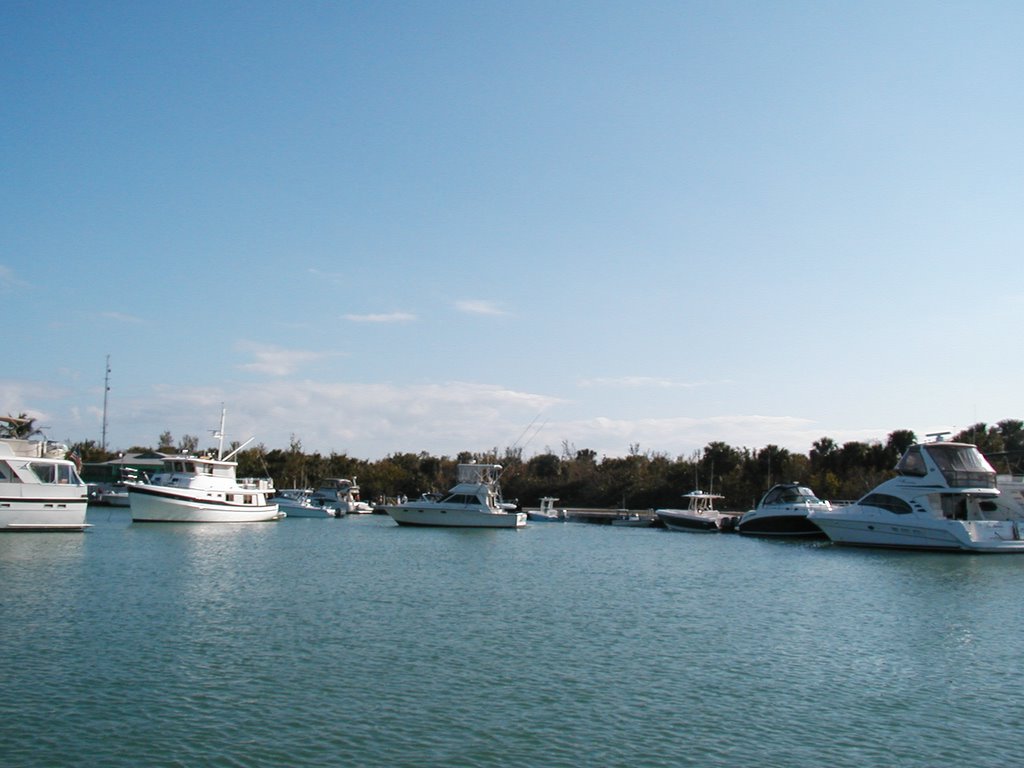
The weather at this time of the year in the Bahamas is a constant flow of cold fronts, bringing cool winds and unsettled weather. Here the sun sets over Great Harbour Cay on a blustery day when the fishing boats were sitting on the banks waiting for better weather.


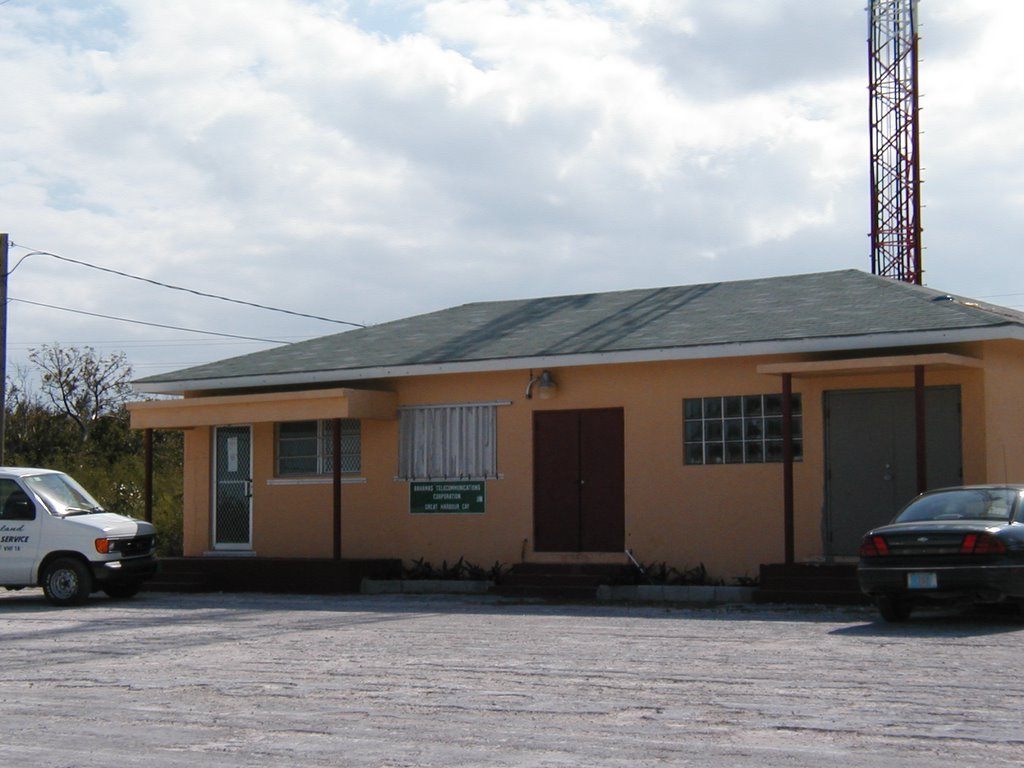
The telephone company office on Great Harbour Cay. The whole premises consists of the office, another building and some telephone boots, and two transmission towers. On the left hand side of the picture is the island bus, which can be summoned on VHF 16.


This rooster crossed the street safely, hurrying across as if he knew it was wise. Not that traffic is particularly heavy, at least at the times we have been in the village. Perhaps it is different when the mail boat comes on Wednesdays, carrying mail and food supplies from Nassau - if the weather is bad the boat simply does not come until the next week - and the same thing for the weekly fuel barge!


In the Bullock Harbour Settlement on Great Harbour Cay (usually just called "the village") the school buildings lie on either side of the road, and motorists are reminded to slow down by two hand-made signs.