Monday, February 20, 2006

Pictures: Key Biscayne, Miami and Great Harbour Cay, Bahamas

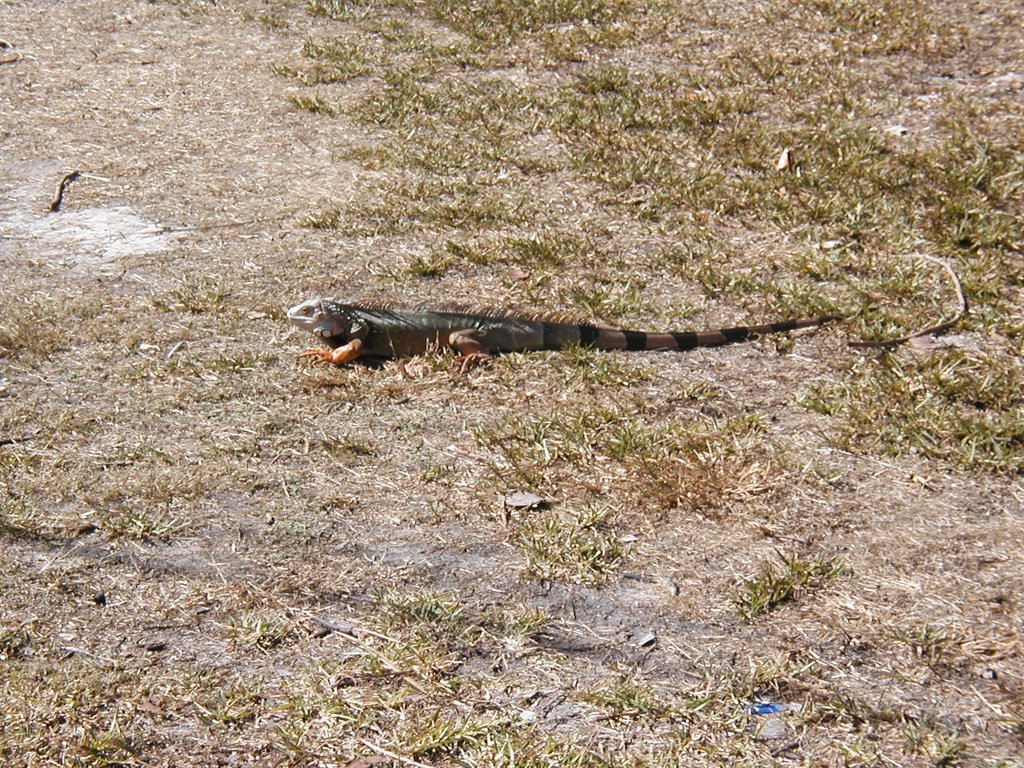
Close to No Name Harbor in Bill Bagg Cape Florida State Park this iguana grazed calmly while we took his picture, more concerned about eating than being approached.


The gulls in Bill Bagg Cape Florida State Park were cautious but not frightened when we approached them as they foraged on the beach.


The nature trails around No Name Harbor were surrounded by trees, bushes and flowers much visited by bees and other insects, including this one.


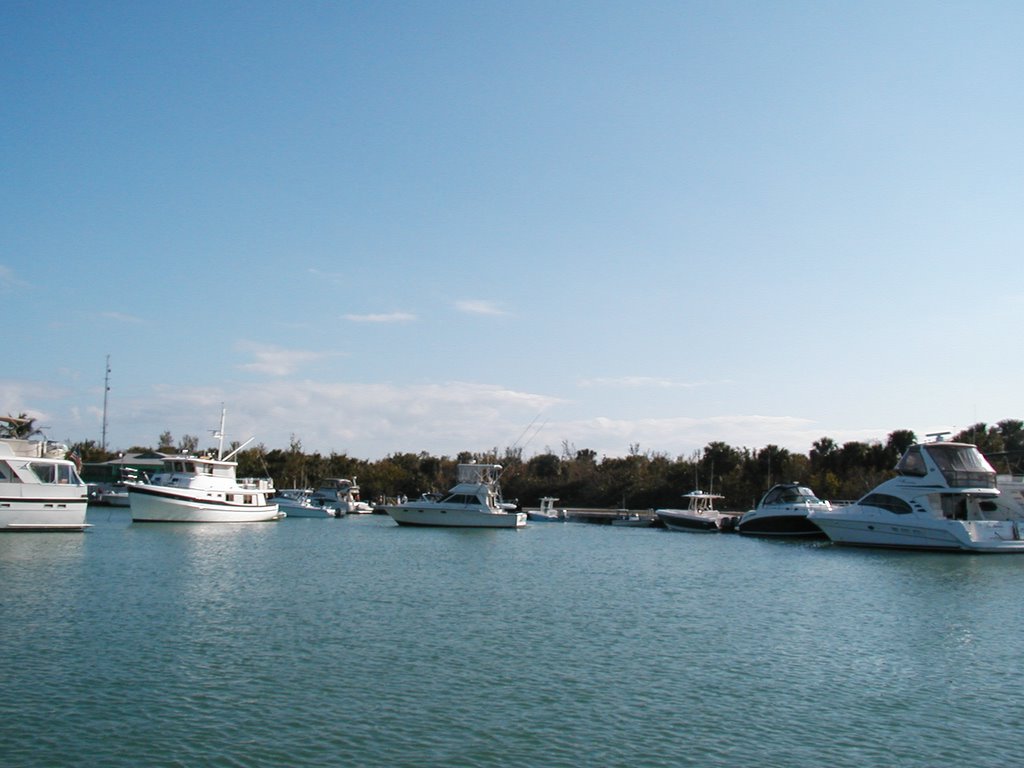
No Name Harbor could get very crowded, especially when a possible weather window for crossing to the Bahamas combined with a long weekend. One weekend there were 35 boats in this small harbor, 25 powerboats and ten sailboats.


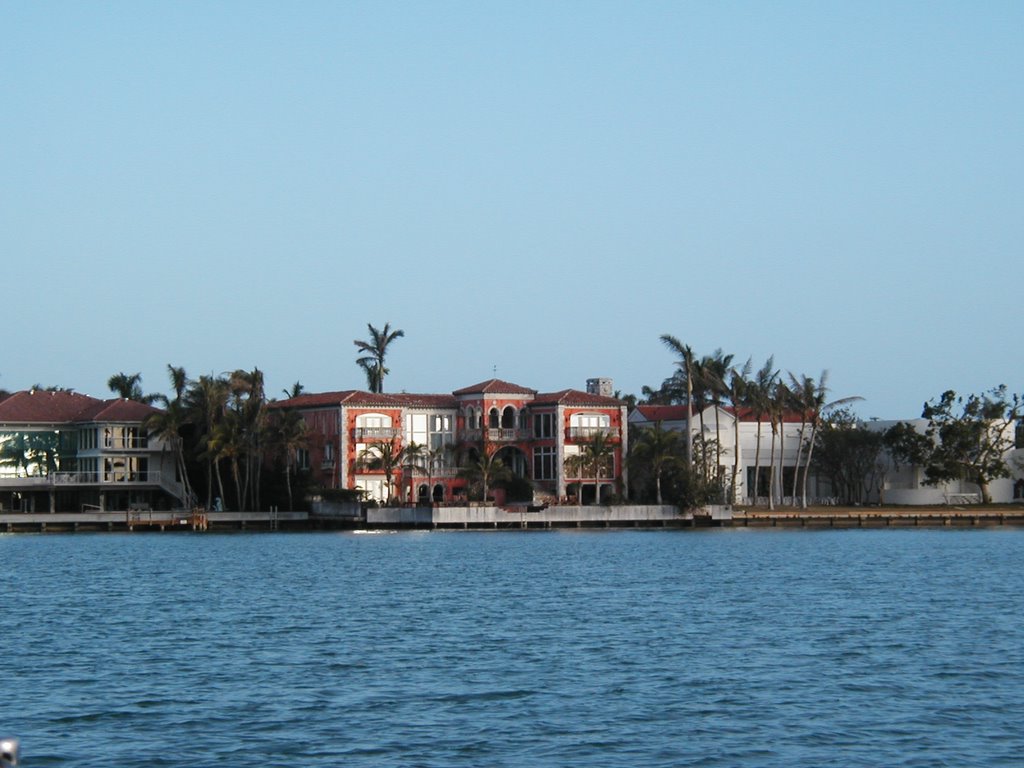
We spent time in and outside Hurricane Harbor on Key Biscayne. The scenery was dominated by large houses, each with its own style; orange seemed to be a popular colour, and the Spanish influence was everywhere.


Hurricane Harbor would probably have more boats anchored there if the entrance, between two shoals, seemed less intimidating. It provides good shelter, the holding is good (extra good if you pick up another anchor as well as your own, as we did) and it is surrounded by obviously upscale houses, some of them beautiful.


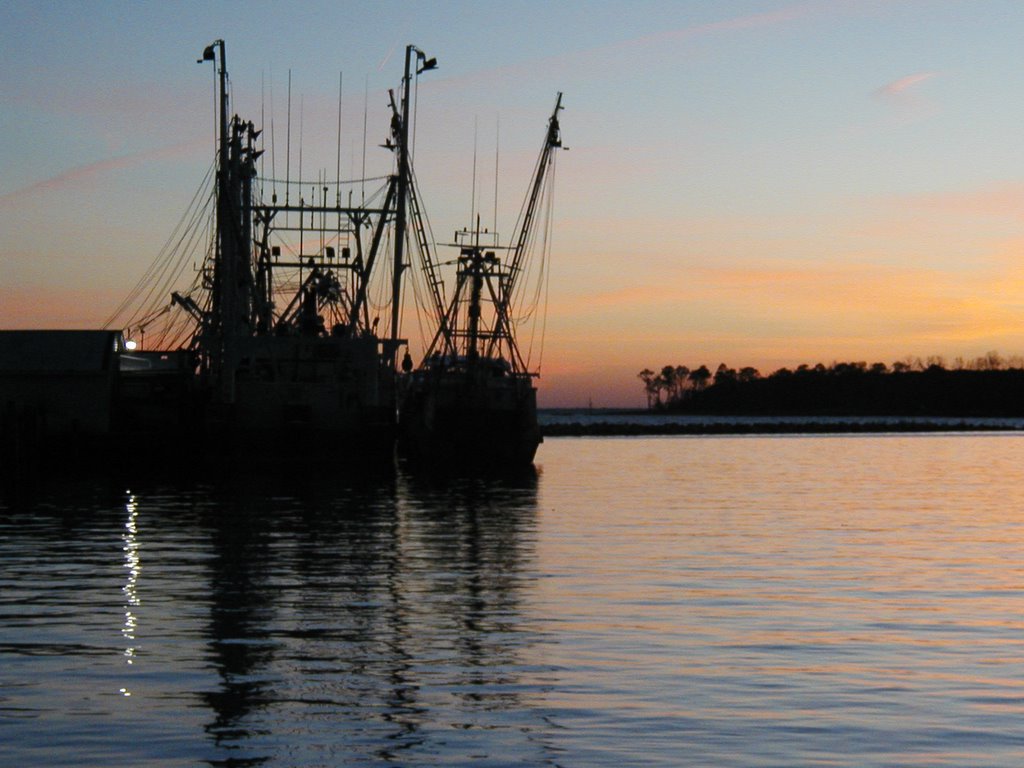
The weather at this time of the year in the Bahamas is a constant flow of cold fronts, bringing cool winds and unsettled weather. Here the sun sets over Great Harbour Cay on a blustery day when the fishing boats were sitting on the banks waiting for better weather.


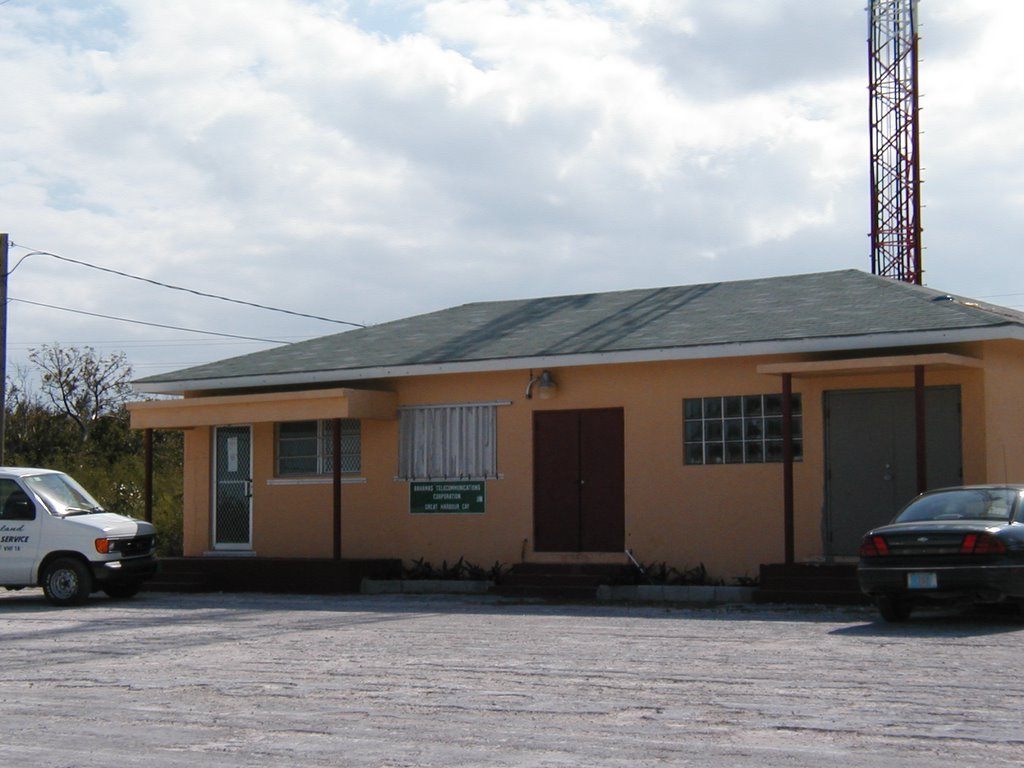
The telephone company office on Great Harbour Cay. The whole premises consists of the office, another building and some telephone boots, and two transmission towers. On the left hand side of the picture is the island bus, which can be summoned on VHF 16.


This rooster crossed the street safely, hurrying across as if he knew it was wise. Not that traffic is particularly heavy, at least at the times we have been in the village. Perhaps it is different when the mail boat comes on Wednesdays, carrying mail and food supplies from Nassau - if the weather is bad the boat simply does not come until the next week - and the same thing for the weekly fuel barge!


In the Bullock Harbour Settlement on Great Harbour Cay (usually just called "the village") the school buildings lie on either side of the road, and motorists are reminded to slow down by two hand-made signs.

Biscayne Bay and Bahamas, the beginning

We spent an unexpectedly large portion of January around Miami, or rather around Key Biscayne. On January second we untied the boat from the berth in Matheson Hammock Marina, having spent most of that day and part of the previous day loading stores, and sailed across Biscayne Bay to No Name Harbour. No Name Harbour is a small man-made harbour in Bill Bagg Cape Florida State Park on the southern tip of Key Biscayne. It is a popular place for boats to gather whenever a weather window for crossing the Gulf Stream to the Bahamas seems about to appear. Before the last weather window in which we (finally) made our crossing we were told there were nineteen to twenty boats there, all waiting.

A word about the weather window: what everyone is looking for is relatively calm waters when crossing the Gulf Stream. Since the Gulf Stream runs north, winds out of the north oppose the flow of the current and raise steep high waves in it. The name of the game is finding a long enough period of time with a southern breeze to allow you to cross with some degree of comfort and without having to battle nasty seas. Then there are a few other things we learned:

1. If you are sailing, you have to try to make sure you have enough wind to go across before you get pushed too far north of the destination you are trying to reach. Our first try was for Bimini, on a south-east breeze that was supposed to turn south and never did. The sailing was pleasant, the seas were small, but we could not get across fast enough - we would have ended up well north of Bimini, reaching the Bahama Banks sometime after nightfall. We turned back.

2. If the winds are high enough out of the south, the Stream will be rough. Our second try was again on a south-east breeze, but this time higher - forecast fifteen to twenty knots, actually probably around twenty-five knots. At the edge of the Stream we were being tossed around, with water spraying over the dodger. This was supposed to be fun? We turned around and surfed back to Key Biscayne.

3. If the usual things are not working for you, try something else. Our something else was to take a little more than twenty four hours and aim to end our crossing further north at a point from which we could go down the North West Providence Channel then turn onto the Great Bahama Bank in daylight and sail to Great Harbour Cay Marina to clear customs and immigration.

Not that we did not enjoy our time in Key Biscayne. We anchored in No Name Harbour, Hurricane Harbour and out on Biscayne Bay. No Name Harbour proved to be a great place for meeting other cruisers, long- and short-term, and we had some interesting conversations and heard some great stories. And we now have a few or our own, like the time three rafts of powerboats dragged across the anchorage on a dark and very windy night. It was also a good spot from which to walk or cycle into town, for groceries or hardware or just for a treat. And there was a real beach, complete with real sunbathers perfecting their tans and beach showers. Very few people actually go into the water there at this time of year, except for children and a few crazy tourists. Hurricane Harbour is surrounded by huge houses, and some of them have docks with huge boats. Most are powerboats, though there were a few sailboats docked, and a few others moored; there was a beautiful two-masted wooden sailing boat shining in the sun in front of one house. Some of the houses were startling colours, like orange or purple, and none looked like any other. The entrance is narrow, with shoals on either side, and that might be why we only saw a few other cruising boats there. Anchoring out on the Bay is best done in calm weather, and gives a good view of the Key on one side, the skyline of Miami on the other, and if you are lucky sailboats racing in a regatta in between. The week we left the Rolex Regatta was taking place, with entrants from all over the world. Richard got to talk to a member of the Canadian Tornado racing team. If anyone knows how they did, please let us know.

A couple of nights before we left we moored in Crandon Park Marina, at the north end of Key Biscayne. There we tried out the outdoor laundry facilities, a washer and drier which still worked in spite of standing outside after the building they were in was destroyed in the hurricanes. We finished the laundry at Richard’s mother’s house, and had a Sunday dinner with family before heading out to the Bay to get ready to cross the Stream.

When we actually crossed the Gulf Stream the weather was good and the seas were calm. A lot of boats had been waiting, and they were bound for several different destinations: Bimini, Nassau, Chub Cay, South Cat Cay... There were two nets running to help cruisers crossing, and each had a total of about forty-five boats. Most cruisers were probably on both nets - even so, that makes for a large number all crossing on the same weather window. As well as all those cruising boats, there was a lot of ship traffic. This we kept our distance from, since ships travelling in the shipping lanes move fast, and even faster going north with the Gulf Stream. Overnight we could see lots of ships’ lights in the distance.

Travelling across the Great Bahama Bank we got our first taste of Bahamian aids to navigation. Some of them are in place; many of these were nothing more than poles sticking out of the water, sometimes with green or red painted on them. If you want to know what they should mean, it is best to consult the charts.

We knew we were in the islands when we went into Great Harbour Cay Marina. The dockmaster greeted us, took our lines, gave us forms to fill out and disappeared to call customs. We did not see him again; the next morning we went to the office to pay for our night’s stay, and dealt with the lady there. The customs officer had forgotten some forms, so Richard had a ride to the airport and back - all of about five minutes. We filled out the necessary forms, paid our cruising permit fee - and we were officially in the Bahamas.

Great Harbour Cay was a great place to start our explorations. We were introduced to the pleasures of home-made bread and bread puddings, were greeted with friendliness by all kinds of people, and rarely got to walk all the way to anywhere without being offered a drive. We had hoped to be able to buy Snapper, but the weather was too poor for the fishermen to go out; perhaps when we go back we’ll get the chance. The only real drawback we found was that there was no bank on the island. There is a credit union (in the green house beside the food store - no sign), but it only cashes cheques. We left at the end of January, but only because winds out of the south-west were predicted, and the anchorage off the Cay is not tenable in a south-west breeze.

And now we have the whole of February to look forward to...

Miami Pictures

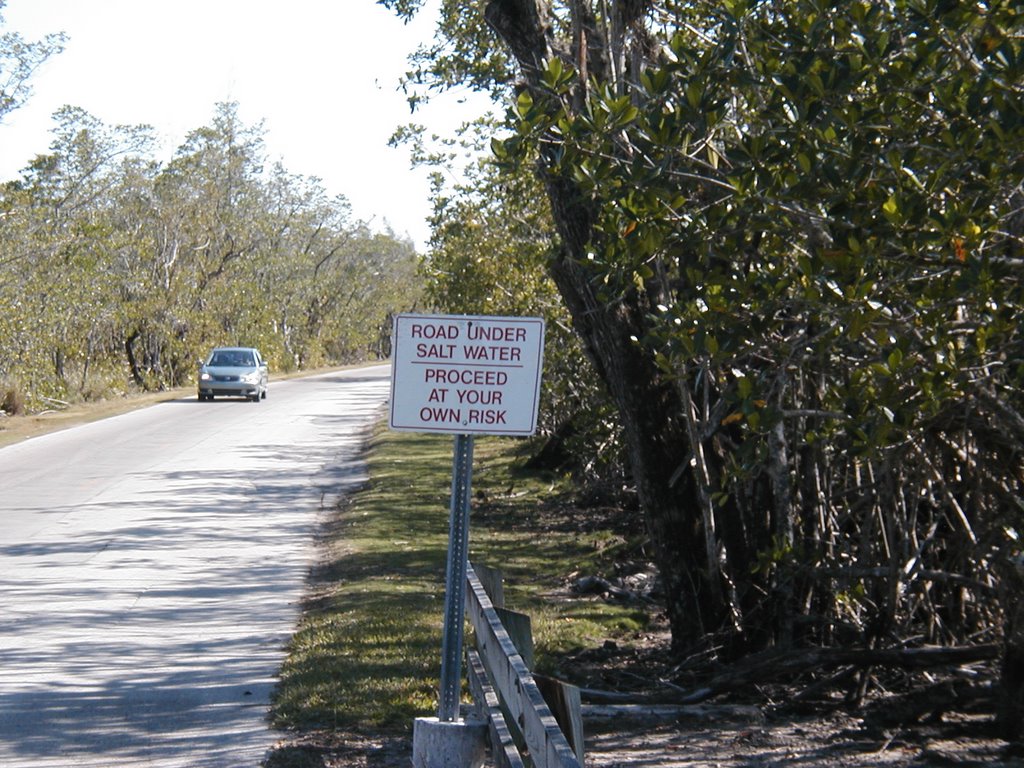
This sign seems to be permanent, letting everyone know that when the road floods it is covered with salt water, not fresh. Wonder what that might do to the electronics of modern cars? There was also a sign warning of alligators in the nearby pond, and prohibiting fishing and pets...


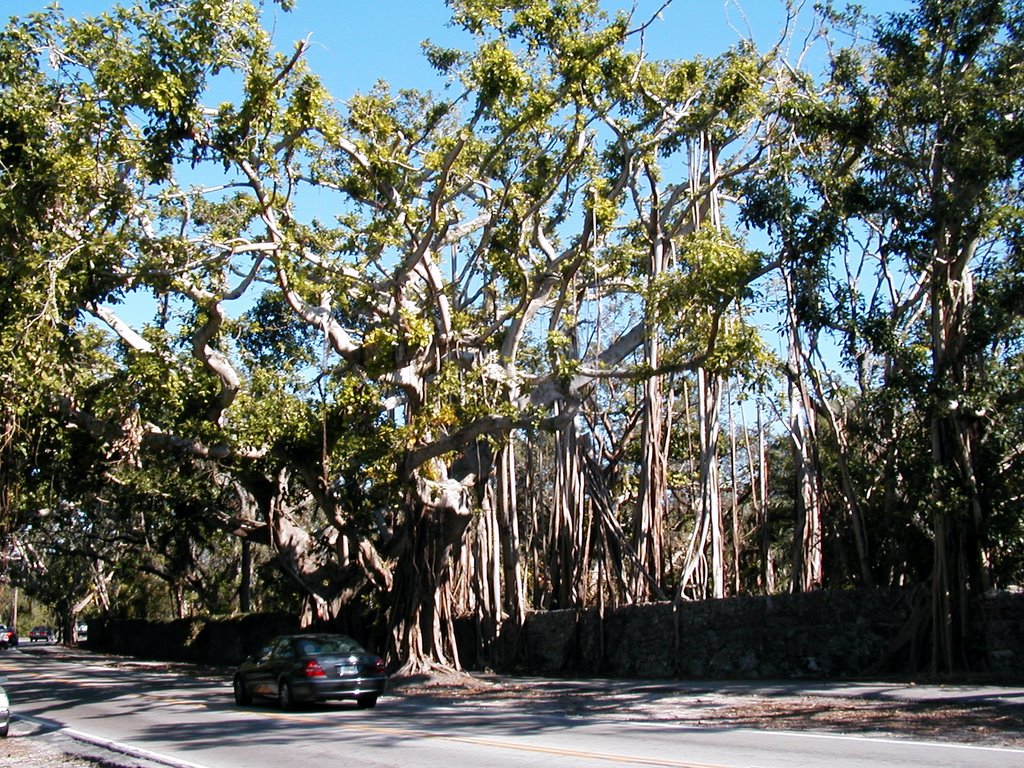
Areas like this show the part of Miami which is not subdivisions and malls. These trees are still recovering from the hurricane, with less leafy growth than normal, but they arch gracefully over the roadway.


These trees are also still recovering from the hurricanes, which stripped leaves and small twigs from the branches as well as breaking branches off. In some places there are roots coming down from nothing, since the branches they were attached to are gone.


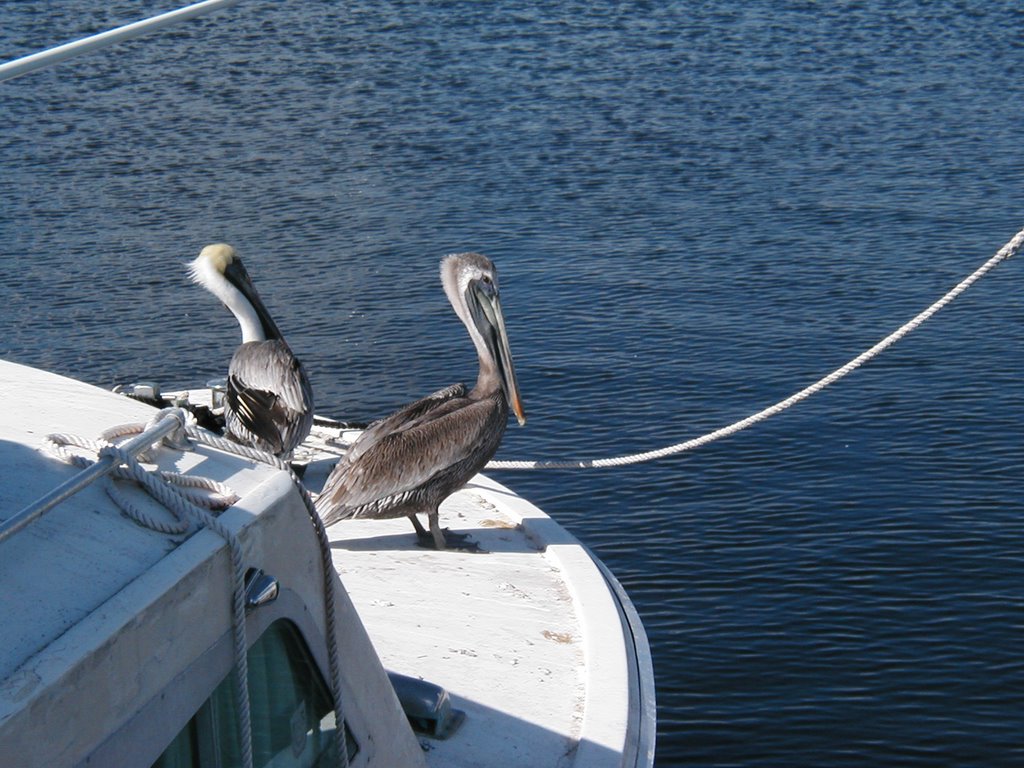
The birds were all around us at Matheson Hammocks Marina on Biscayne Bay in Miami. Here pelicans have taken over a hurricane damaged boat docked not far from us.


Here, a cormorant rests on the pulpit of a hurricane damaged sailboat. Cormorants, like pelicans, gulls and terns, were all around us, making a mess of the boats they favoured, usually those on which they were undisturbed. However the cormorants and gulls were willing to rest anywhere, given the chance.


We watched the Fort Lauderdale Christmas Boat Parade, complete with fireworks from a barge leading the parade as it moved along the ICW.


Each time we visited our boat in the marina we saw one or more of these Night Herons in the mangroves by the docks.

December in Miami

We arrived in Miami at the beginning of December, and docked in Matheson Hammock Marina for the month. We had to move off the boat while we were there, since the Marina was in a park which closed at sundown and did not allow anyone on the premises after that. So we had to move off the boat, and found that this was not easy. The best thing about being land based was that it allowed us to spend a lot more time with family than we had been able to in the past and did give us certain conveniences, such as access to cars, shopping and the internet. The biggest disadvantage was that we had to battle the birds, who considered any boat left alone for any period of time to be theirs. Into The Blue has never been cleaned so often and so thoroughly as it was over this month.

Being in Miami with a boat to care for gave us a different view of the city than we had in other visits. We drove through parts of Miami we had never seen before, and found our way to less expensive marine stores, the existence of which we learned about as we explored, searching for economical places to buy the things we needed. At Sailorman we learned about Sailing Services, at Sailing Services we learned about Shell Lumber (an unexpected source of marine hardware as well as lumber), driving to and from Shell Lumber we discovered Crook and Crook. We did pass West Marine from time to time, and realized that there were three stores very close to each other along US1. We met another Alberg sailor, who was waiting to have the hurricane damage to his boat fixed, and talked about racing on Biscayne Bay and the habits of birds.

Ah yes, the birds. There were pelicans, and cormorants and anhingas and starlings and terns and gulls. The pelicans had taken over one of the hurricane damaged boats sitting a couple of docks down from us, and roosted happily on its deck and superstructure. The cormorants were happy to roost on the pilings, plus any convenient mast, spreader or pulpits. The terns had taken over the bimini on one of the powerboats, and were resting there in groups. The gulls landed anywhere, including sailcovers and dodgers. The starlings went where the larger birds did not go, landing all over any boat. All the birds except the starlings were eagerly waiting for the arrival of boats returning from fishing expeditions to the launch ramps not far away. And they all left their calling cards behind wherever they roosted. After the first time we went back, we covered the sail cover and deck beneath with tarps. At least we did not care if they were damaged.

On this visit we were very aware of hurricane damage. From the blue-tarp covered roofs to the piles of debris still waiting to be removed to the trees just recovering their greenery, the evidence of what had happened was everywhere. It was odd to see some trees and houses seeminlgy completely untouched close beside others which were damaged. Some of our family members were in the process of repairing damaged fences and shoring up surviving trees, while others had more to deal with.

Christmas was a reason to celebrate, to finish up repair work and put up lights and decorations. The Fort Lauderdale Boat Parade was in this spirit, and a lot of people turned out to cheer and enjoy the spectacle - including us. By Christmas we had finished cleaning out residual mildew from damp, cold days, and the boat was presentable enough to take out those family members who were interested and had the time. Then it was time to re-provision and get ready for the next part of out trip...

Thursday, December 08, 2005

ICW Pictures

Looking down the Dismal Swamp Canal, quiet and peaceful and surrounded by trees. Its depth is uncertain and speed limit restricted, so it is used mainly by sailboats with shallower draughts and trawlers.


Another view of some of the trees surrounding the Dismal Swamp Canal. There are birds of several kinds, including woodpeckers - we saw evidence of their work many times, but only heard one once.


Elizabeth City is a key destination for cruisers coming through the Dismal Swamp route of the ICW. Friendly volunteers make everyone welcome, and the city is hospitable to everyone - though its businesses do close down on Sundays.


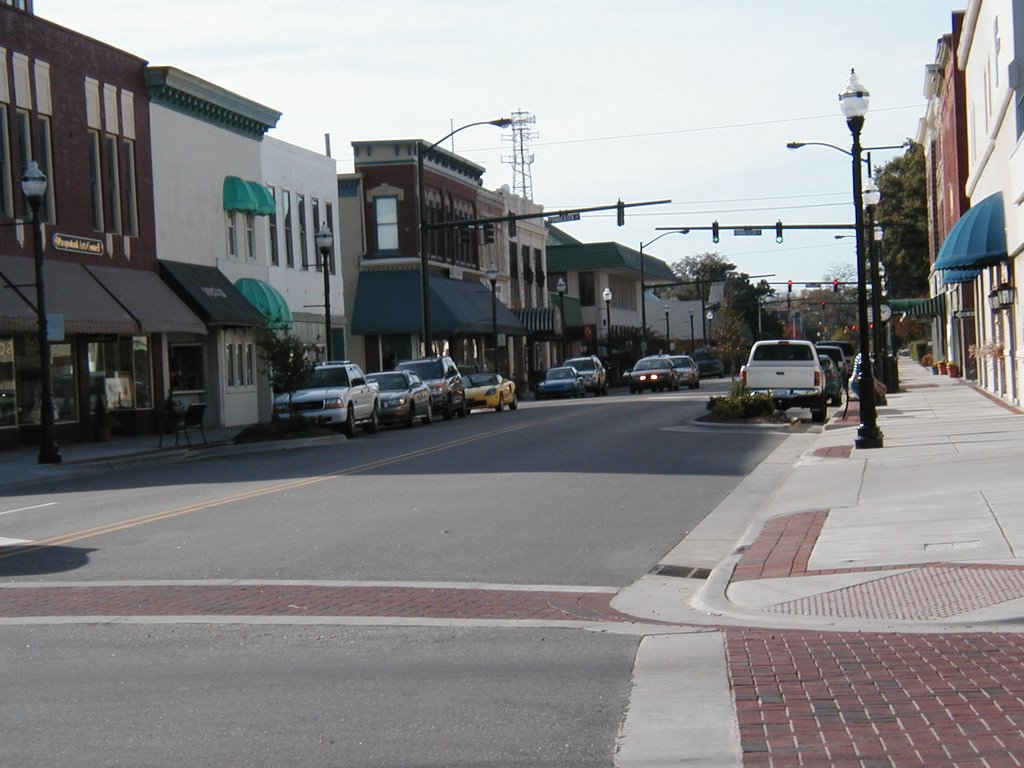
The downtown streets of Elizabeth City are undergoing a renaissance, with many small stores moving in.


Alligator River Marina was an unexpected find, inexpensive, with good facilities and a simple, clean layout. All this, and a morning paper too!


You go carefully along Alligator River, minding the chart and staying in the channel - and even then there is no guarantee that you will not meet deadheads (floating logs). There are many dead trees along the banks as well.


We anchored for two nights in Bear Creek, with a windy day in between. We had to feel our way in between shoals, some marked with stakes, but it is very sheltered from most wind directions - good for peace of mind.


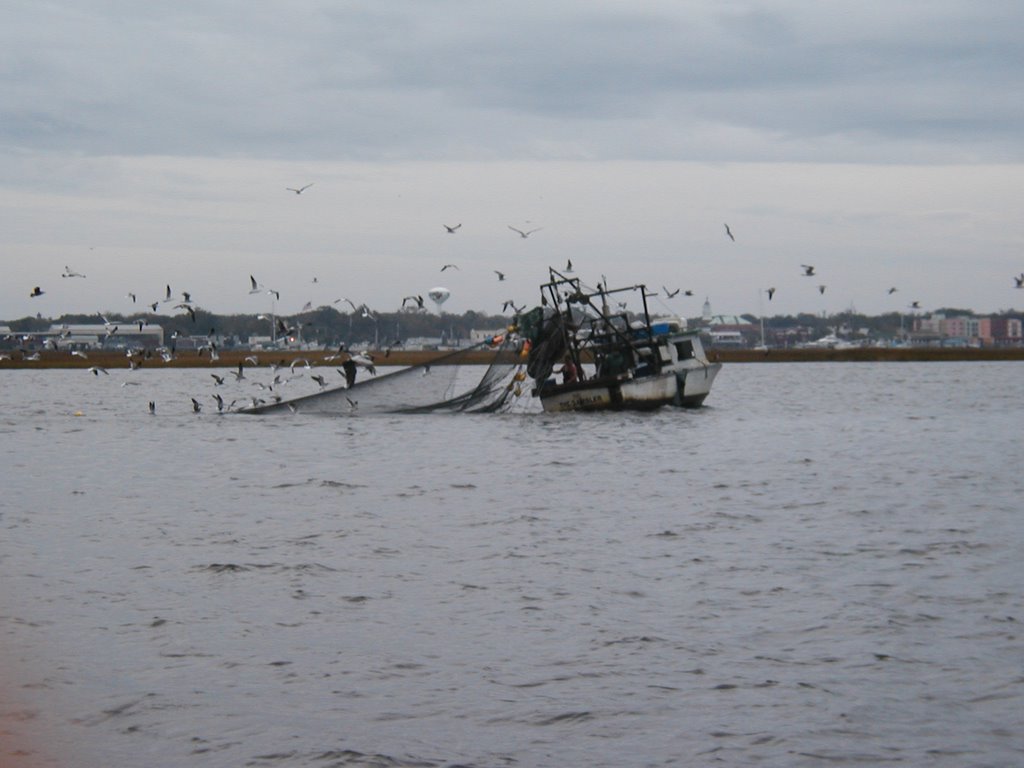
Shrimp fishing boats sitting in the harbour in Oriental, North Carolina. They trawl with nets lowered from the long booms, now raised.


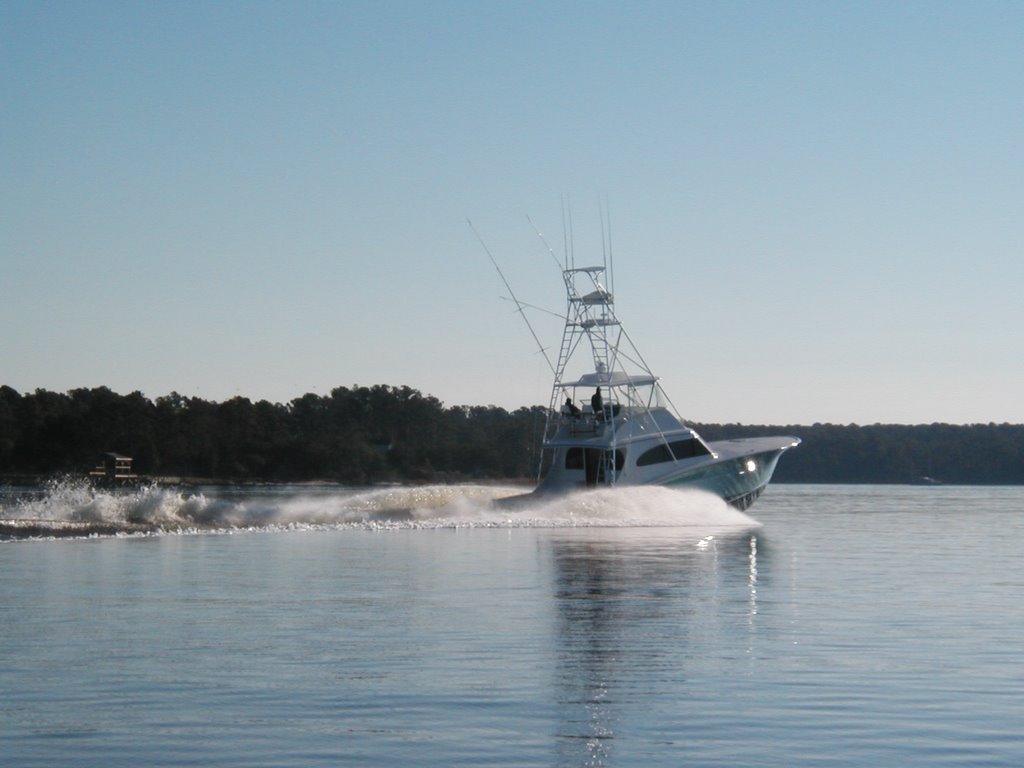
A sport fisherman, passing us full blast - something we have not met very often in this part of the waterway. Most people are considerate, and pass slowly making as little wake as they can.


As we approached Beaufort, North Carolina along the Adams Creek Canal we could see the sand banks along one side of the river, and felt how much closer we were getting to the sea again.


One evening in Beaufort NC we saw this team go out rowing. Note that everyone seems to be doing their own thing...


We were in Beaufort, North Carolina when we saw this boat for the second time - the first time was Jackson Creek on the Chesapeake. This meant that this was one of the few times we were not the smallest boat in the harbour. A young couple are cruising in this boat, heading for ??? They did not know for sure.


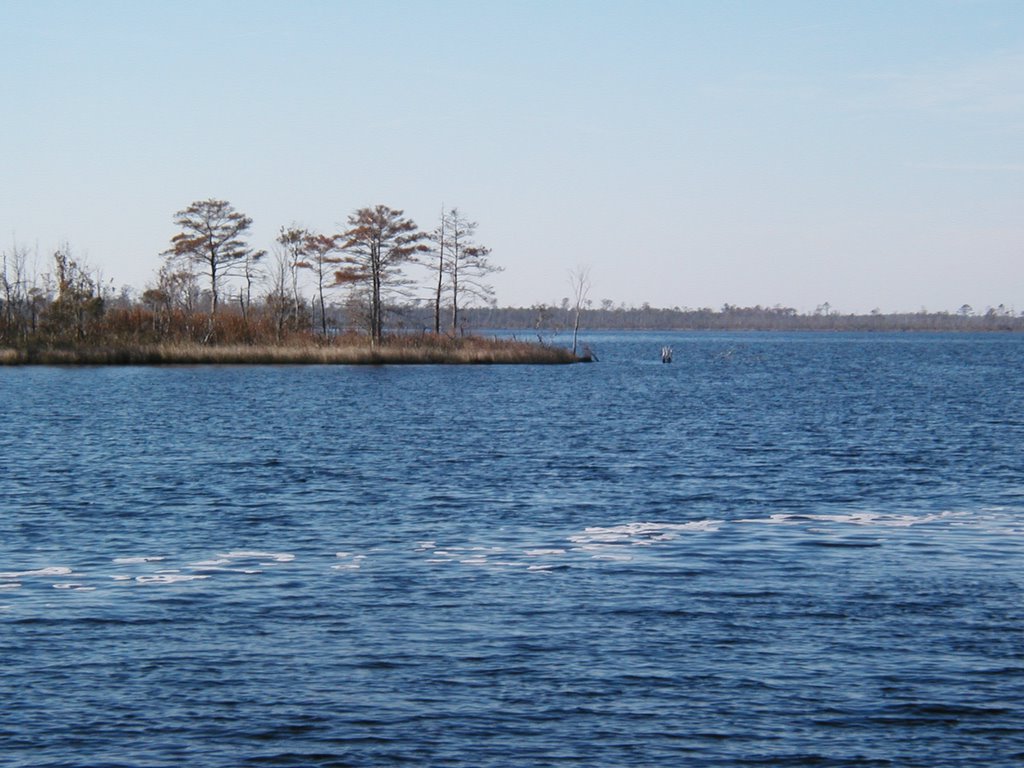
This anchorage on the South Edisto River in South Carolina was the most isolated one we have been in so far - when night fell, there were no lights around, and the only traffic we saw were hunters heading for their blinds.


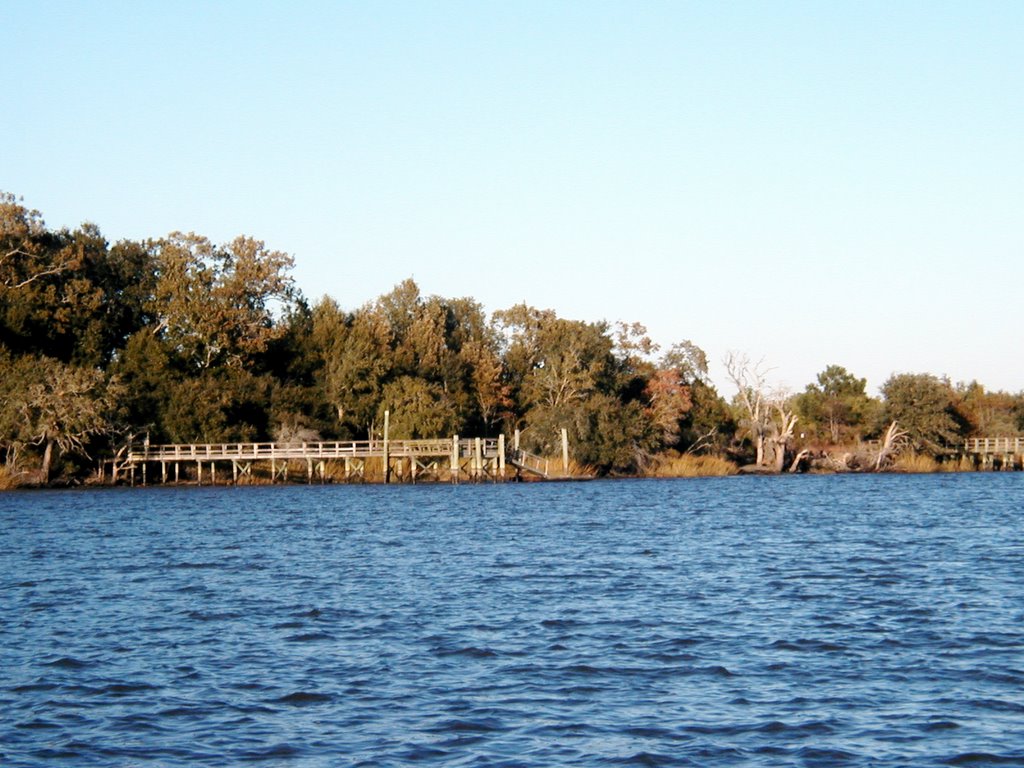
This picture from Beaufort, South Carolina, shows how people build their docks out as far as they can to get past shallow areas close to shore. The tide was partly out - you can see the high tide mark on the posts.


One day we saw shrimp boats out trawling around where we were anchored up the Bell River across from Fernandina Beach. The birds were following closely - pelicans and gulls - looking for their share.


Here the shrimp boat is listing to the side as it brings in its net and catch. The birds are hovering...


One of the main streets in Fernandina Beach, with Christmas decorations already in place. Palm trees helped create the feeling of being in a tropical place. There was a big Christmas tree down by the harbour, decorated with festive red ribbons.

The Intracoastal Waterway and East Coast

Norfolk is another of those harbours which keeps the sailboat crew on their toes. There is a wide variety of traffic, smaller and larger, including large cargo ships, tugs and barges, large commercial fishing boats, passenger ships and warships. We had to maintain our distance from navy facilities and keep our eyes peeled for everything else. Commercial traffic continues until the second opening bridge on the system - while we were waiting for it to open we watched two tugs which had been bringing a large cargo ship through the twists and turns behind us move it sideways into its berth. Watching those tugboats work left us very impressed with the seamanship of captains and crew.

Once past the second bridge, we were on our way to then through a small lock, and into the Dismal Swamp Canal. The name sounds as if it should be a place of ghosts, goblins and witches. If there are any ghosts, they are the ghosts of history, since this canal was surveyed by George Washington and dug by slaves. It is beautiful, but its continued existence as a route for pleasure boaters is up in the air and the funding needed to keep it open is in question year after year. And yet it is a place of beauty and history that Americans are justly proud of, and one which leaves the boater with a very different view of the United States that any you may get passing through more quickly.

We spent a night at a small dock on the canal which we reached as darkness was falling; we rafted there with another sailboat we had gone through the lock with. But first we had to wait while a farmer who has special permission to run a bridge across the canal got trucks, equipment and workers across to the other side - one of those very long five minutes. The next day we stopped briefly at the Visitors Centre, where the staff were very friendly and helpful. We got free guides and were able to exchange books, dump trash and get water before heading for the lock out of the canal, passing a barge clearing the canal along the way. The bottom of the canal becomes the resting place of bits of trees from the banks, which sometimes fall into it as the banks erode.

After the Dismal Swamp comes one of those destinations cruisers aim for - Elizabeth City. The dock is free for forty-eight hours and there are volunteers there to greet you and help you dock when you arrive, and make sure you can find your way around town and get what you need. If there are enough new boats that day, the Rose Buddies hold a wine and cheese, very simple, in the afternoon and make everyone welcome, and cruisers get to meet each other and sometimes see old friends again. Like Waterford on the Erie Canal, it adds just that little extra bit of friendliness and warmth that encourages people to stay and come again.

We took advantage of good winds to go across Albemarle Sound, and enjoyed the opportunity to sail instead of motoring. It was a good day, followed by a decision to stay the night in Alligator River Marina rather than feel our way into an unmarked anchorage or anchor in the Alligator River. We thoroughly enjoyed it there - small but clean and friendly and providing everything we needed, including hot showers and a place to buy breakfast, just for a change, the next morning. When we came in there was a Jimmy Buffett tape playing on the speaker system, just loud enough so that we could listen to it if we wanted to...

Of course the next day, after going through the Alligator River, we did feel our way into an anchorage on Bear Creek - some of the shoals were marked with stakes, and there were some crab pots which helped show where some of the deeper water was. We stayed two nights, having decided to sit out a blow in the shelter there rather than head for Oriental and be there for the Veterans Day Holiday - we needed to buy some more charts and a few other things, and wanted to be sure we had a good shopping day, since free docking is limited to 48 hours.

Oriental proved to be a great place to visit. We managed to find a place at the free dock, which only has space for three boats. Down the road was a marine store, and across from the dock a cafe with some of the best cinnamon buns we have had. A lot of people come down to the dock to see who is there, and visit and chat. Many of them are ex-cruisers or between-cruisers, who had stories and advice to offer. We did more work on the boat, were given a drive to the grocery store and a short tour of the town by one kind gentleman, and spent time being visited. Oriental is one of those towns which is genuinely welcoming and friendly. We even got help with our wi-fi.

From Oriental we followed the ICW to Beaufort, North Carolina, where we ran into Kim and David again when we were briefly anchored in the same creek. They moved on to where the action was, while we stayed put in the back door anchorage. It was interesting - the dinghy dock dried out at low tide, but a friendly gentleman offered to let us tie up to his houseboat while we went and did laundry. We chatted, of course, and when we came back he had a suggestion for the next part of our journey - to go outside to Masonboro outlet, before Cape Fear, go inside to Cape Fear, and then head back out again. And that is what we did - it worked very well, since conditions outside were not going to be good for very long.

We left early in the afternoon to sail overnight to Masonboro Inlet, to be sure we would get there in daylight. The night proved exciting, as we went from light air to a double reef in the main, back to full sails, and then back to a double reef with partially furled jib, before heaving to to ride out a storm before dawn. Tiredness probably was a large part of the reason we ran aground the next day, and had some practice laying out our anchors and waiting for the tide to rise. By the time we made it to the anchorage we had chosen at Columbia Beach, it was dark - so we had to feel our way cautiously in and bumped on a sand shoal before we were able to get anchored safely. After that, we slept...

We waited at Columbia Beach for good weather to make the next trip outside, and when we finally heard a good forecast set out early in the morning for a trip down to Charleston. We had hoped to make St. Mary’s River, the border between Georgia and Florida, but the weather window was not long enough. As we entered the Cape Fear River we put the jib up; we never did put the main up, because with the wind behind us and on jib alone we were flying along at hull speed and higher; at times we were surfing down the waves. And at the same time our wind generator was keeping the batteries charged, meaning that there was probably about 25 knots of wind instead of the forecast 10 to 15 knots. It stayed the same all through that day and the night that followed, and we got to the channel in Charleston before daybreak the next day. By 9:23 the next morning we were anchored in a creek close to Charleston, having covered about one hundred and seventy miles in about twenty-seven hours. Not bad for our boat, but somewhat exhausting for us ! Once again, we slept.

Windy weather on its way meant a change of anchorage to one with better holding and more shelter from the waves, and we spent a couple of days anchored behind a marsh island on the Stono River waiting for the 35 to 40 knot gusts to subside. Good anchors are a wonderful thing. Then we spent the next few days travelling inland down the ICW to Beaufort, South Carolina. At Beaufort we anchored up Factory Creek where we stayed for a couple of days while visiting Beaufort, a town of graceful buildings with a thriving downtown shopping district along the waterfront. We used the visit to look after those necessities of cruising life, laundry, shopping and showers, before we headed out the Beaufort River inlet to Fernandina Beach, Florida.

Heading out, we put up the sails as we were going out the inlet. The winds were brisk when we started, and at first we were travelling under reefed main and partly furled jib and surfing along until the winds died down toward the next morning. We ended up motorsailing for a couple of hours to reach the inlet. Then it was in along the white sand beach, and anchor up yet another river across from the town and harbour, to spend another couple of days waiting for the winds to shift around to out of the north and exploring the town by foot, enjoying the colorful buildings, big old trees and rows of palms.

From Fernandina Beach we set out on a projected three day sail to Miami. With the winds behind us, we made very good time and were outside the inlet to the Port of Miami in less than three days. Rather than go in in the darkness, we spent several hours lying hove to while waiting for daylight, and watching the cruise, cargo and container ships anchored off the port waiting for pilots. The cruise ships are always easy to see, since they are lit up like Christmas trees. Since the pilots start work before daylight, by the time we were ready to go in we did not have to worry about the parade of big ship traffic. Once inside we headed for a marina where Into The Blue will spend the next few weeks while we visit with some of our family, and do yet more boat work. With the experience that comes from actually doing this, we have found there are some changes we need to make, and of course there is always maintenance...

Written Dec 7, 2005

Saturday, November 12, 2005

Chesapeake Pictures

We visited the Rhode River twice, once with the Alberg group and the second time overnight as we made our way down the Bay toward the ICW. It is a very peaceful anchorage.


On our first visit to the Rhode River, we took this picture of some of the boats in the Alberg Association cruise rafted together. This, as we learned, is part of the tradition of the Chesapeake Alberg Association, and a very sociable way to sail.


Who could resist this picture, of the way many cruisers socialize - meeting by dinghy. they were from different rafts on the same cruise.


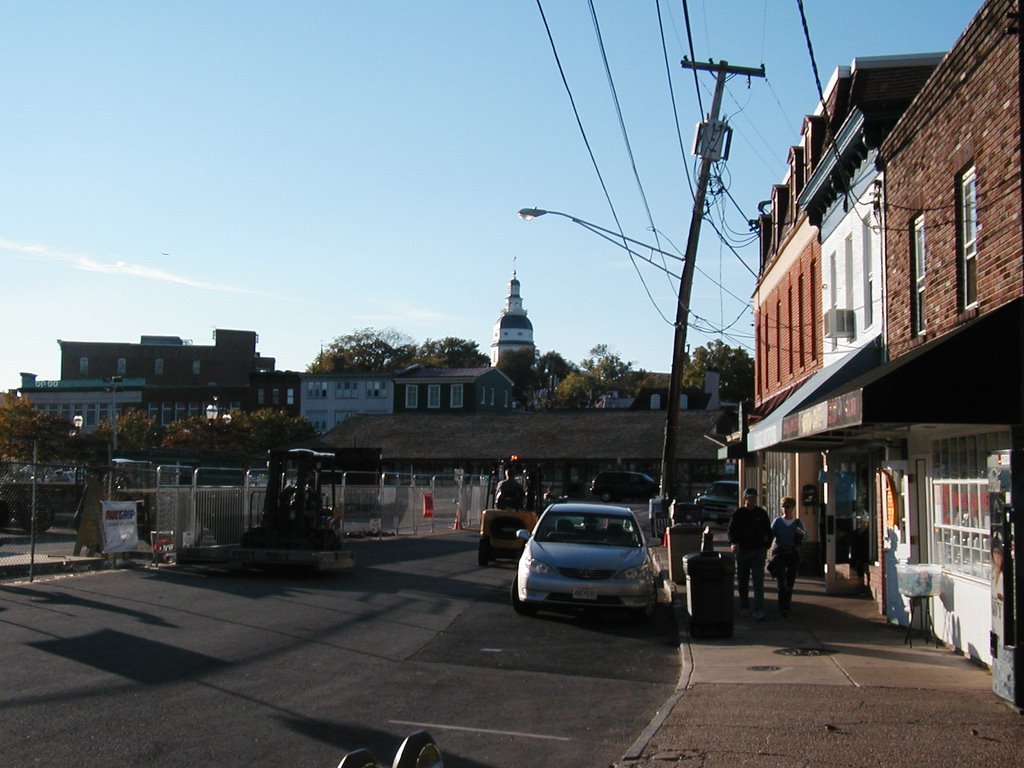
The leaning lightpost caught our attention; this street was blocked during the boat show, and the waterfront to the left was still being returned to normal when we took this picture.


Downtown Annapolis after the boat show returns to normality; a city of history, with older buildings and narrow streets.


We were moored at the end of this dock for a couple of weeks while we explored Annapolis and did some boat work. It was a very nice place to be.


We spent three nights in the Solomons, arriving there in cold, rainy weather which left everyone asking "Is your boat raining inside too?" The weather was caused by the remains of hurricane Wilma, whose passing we sat out there. The day the sun came out, all the cruisers all emerged...


When we emerged, one of the things we saw was yet another new condo development with docks, this time by the anchorage in Solomons.


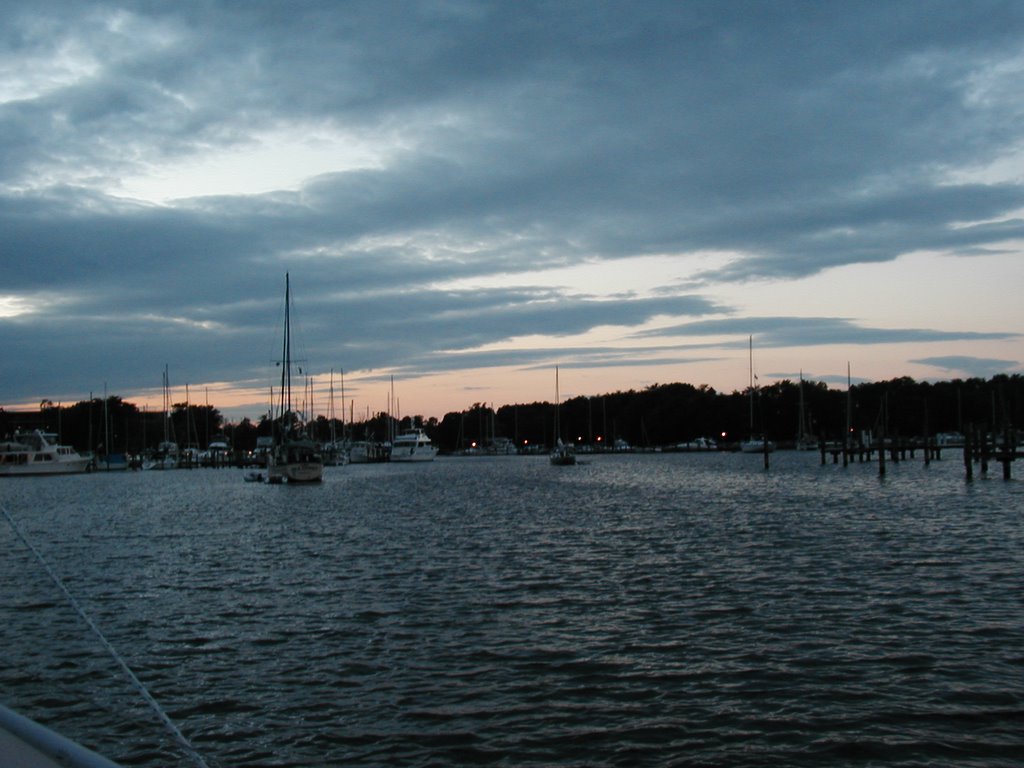
Another one of our overnight anchorages, a very quiet spot on the Glebe River.


On our way to the Glebe River on the Potomac, we saw this beautiful schooner heading out.


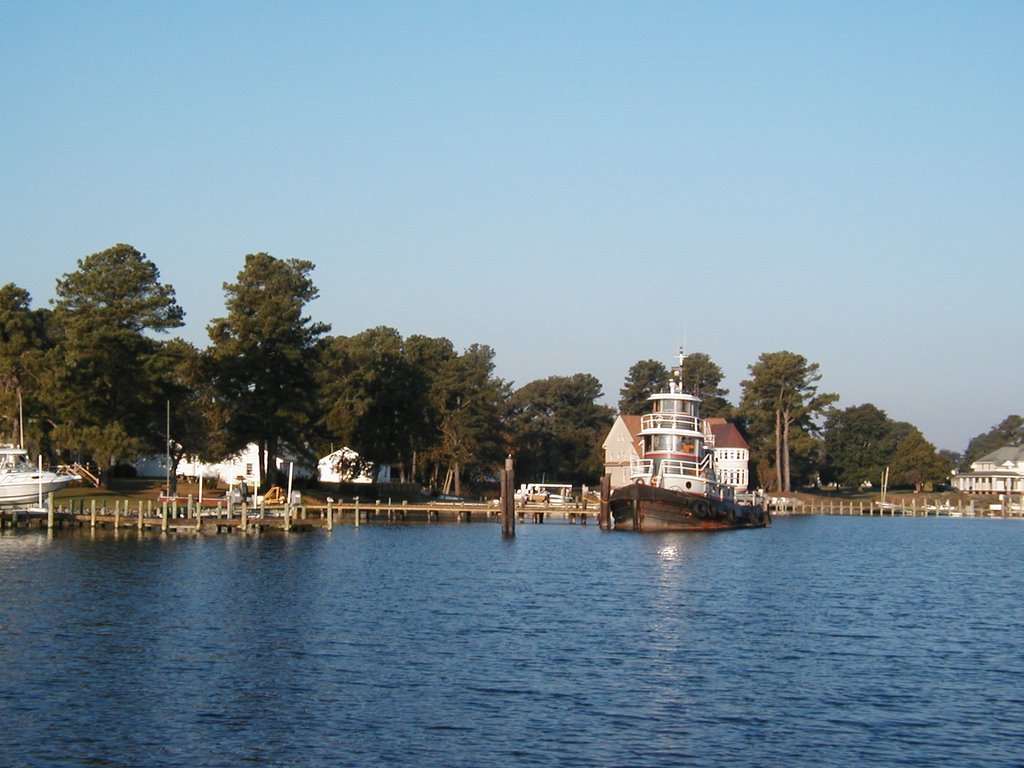
On Jackson Creek, this tug was sitting at one of the docks with all its lights on, looking ready to go at any time.


Hampton has a very inviting waterfront, including the Cousteau Society building which we visited.

More on Chesapeake Bay

Now that we have actually left the Bay, we look back on this time there as a very enjoyable part of our cruise. We are glad we have spent the time there that we did, and plan to be back again.

Life was a lot more social than we expected. Leaving Worton Creek and meeting Jay and Joan was just the start. When we went to the Magothy River and were greeted by yet another Alberg 30 owner, Bob, (now ex - but that's another story), who was hosting the Rendezvous and wanted to invite us as well, we were into a whole new experience. To pick it up from there:

As we prepared anchor off the Bob’s house where the Rendezvous was being held, he invited us to tie up at his dock instead, we being the first ones there. Of course we were coming the shortest distance that day - from one side of a small island to the other. They offered us showers - how to find your way to a cruiser's heart! The Rendezvous was followed by an invitation to go along on the Alberg Association cruise. The fan in our composting head (toilet to the non-nautical types) had quit - someone came up with two suitable ones. We needed to go to the bank and do some food shopping - we were offered a car to do both. So naturally we had to go on at least part of the cruise!

It was a lot of fun - we got to see parts of the Chesapeake we would not have ventured into without being in the company we were in, met some very nice people and ate some very good food. We learned the meaning of skinny water, and not to worry too much about crab pots. And the weather stayed nice until just after we got to Annapolis for the Boat Show.

We were a little worried about having space to anchor in when we got to Annapolis - but Joan contacted a member of the association who has a dock on Spa Creek (one of the places in Annapolis many people anchor). We docked there, and in the process finally learned from our good host, Paula, the correct way to do it in these tidal waters. We had avoided docking till then, preferring to anchor out - easier and usually more private, except in circumstances with a host as thoughtful as this.

We met some of our friends from Queen City YC at Pussers, the bar probably most frequented by visitors to the boat show (where else), and caught up on some of the news from Toronto. Then we hunkered down on the boat through a day of rain, went to the boat show and met more people we have met cruising, walked around town and met more people we have met cruising... You get the picture. Then we had a few days until the Can-Am races between the Great Lakes and Chesapeake Alberg Associations, and we spent time doing maintenance on the boat. Cruising does not mean maintenance in exotic places - it means maintenance in all kinds of places. We also found a used outboard engine - greatly reducing the time we need to spend walking while in Annapolis, and making shore trips generally easier elsewhere.

The Canadian/American Friendship Weekend was very enjoyable. We crewed for the races which were held - the second day actually saw the racing called due to very high winds, an unusual experience in Alberg circles. We crewed with Bill on Limerick, and thoroughly enjoyed the experience - though it felt a little odd to be racing on an American team boat. The weekend naturally included a certain amount of socialising - we met more kind and interesting people, ate more good food, caught up a little more on the happenings in Toronto, and had a thoroughly good time.

A few more days of boat work, socialising and wandering around Annapolis, and it was time to make our way down the Bay to the Intracoastal Waterway. We had a last cruise with the Alberg Association at Lake Ogleton (delicious chilli courtesy of Towney), and then worked our way down - Rhode River, sitting tight in the Solomons during a few days of bad weather, Glebe River, Jackson Creek, Hampton - another few days, for laundry, shopping, etc. and just enjoying a very nice town. And then it was a choppy ride, water flying over the bow, over to Norfolk and into the IntraCoastal Waterway.

Written Nov. 10, 2005

Hudson, Delaware Bay and Start of Chesapeake

ON THE HUDSON RIVER:

Next stop was at Castleton-on-Hudson, since we were impatient to put our mast back up. April First stopped there as well, and we met other cruisers on their way down or back up. Two of the boats were being cruised by Canadian couples, one on their way down for the first time, the other on their way back up after visiting the wooden boat show in Rhode Island with their self-built wooden boat. There was discussion of stopping places and comparison of boats, and of course food and drink, before most of us took off to follow our separate ways. A note for those passing through: there is an Italian restaurant in Castleton where for a reasonable price you will be served enough food to last you a couple of days - and they pick you up from the Boat Club.

Castleton was the first place we could really see and feel the effects of tides and currents. You could tell the state of the tide by the steepness of the ramp to the dock., and by the direction of swing of the boats on moorings. If you have a tall mast, it is probably better to put it on at low tide! Everyone who happens to be there pitches in to raise or lower masts, and while we were there the number of willing hands and variety of experience made the job easier.

Since Castleton, we have been anchoring out: off Rattlesnake Island, up Esopus Creek at Saugerties (tiny, but very quiet), behind Pelopel Island (interesting ruins, but not quiet - the trains run right beside the river), and then off Nyack for four days waiting for hurricane/tropical storm Ophelia to pass. Behind Pelopel Island we got to feel what it was like having the wind oppose the tide - the boat went in circles around the anchor all night, pushed by the wind and pulled by the tide. At Nyack we had some of the same effects, as the weather and wind direction changed. Makes you grateful for good anchors and a chain rode with swivel.

We were fortunate enough to meet another cruiser based in Nyack at the Boat Club, who was getting his boat ready to head out in a couple of weeks. He invited us to use a dock for our dinghy, and the showers,and encouraged us to explore the town. Last count, two good ice cream shops, one upscale (read expensive) and one the regular, tubs behind the counter kind of place. Nice stores, upscale cars, extremely expensive houses, condos being built on the waterfront; on weekends all kinds of people walking through historic areas or on the main street with their families. When we left, the Nyack Boat Club was in a state of ferment as they prepared for the Ensign Nationals to be held there the following week - forty or fifty boats expected, all an older Pearson design, lines looking very much as if Alberg had a hand in them.

From Nyack we headed for New York City proper. There was a rapid increase in the volume of traffic and the size of boats and ships, and it felt rather like being in a field with trucks and cars coming at you from all directions - not to mention the helicopters overhead and the constant chatter on the VHF. By the time we found the anchorage off Liberty State Park, we were very glad to be in a quiet place. And after they cleared the park of people and vehicles at 10:00 p.m., it was truly quiet. We slept very well.

The rest of the trip through New York Harbour, on our way to Sandy Hook, had us on our toes - boats, ships, ferries and tugs and barges going in all kinds of directions. The Staten Island Ferries, rushing past us, will remain in our memories. We were glad to have that part of the trip behind us when we dropped anchor in Atlantic Highlands. A couple of nights there - we followed what has become the usual routine: find the laundromat, the grocery store and the hardware store, and look for internet access. We did find the latter, but just as we were getting ready to leave.

A Touch of the Atlantic:

From Sandy Hook we hoped to make the run down to Cape May in one go. All went well, though we had a brisk night, until we ran out of wind on our second day out, and the engine decided that it could not run on fuel mixed with water. We ended up sailing into the anchorage behind Rum Point in Atlantic City, and taking a day to sort out the fuel problem (read drain the water out of filters and hoses). Then we waited a day for the 20 to 30 knot winds to die down, joined by another cruising sailboat which we will probably see sometime further along, since they travel more quickly than we do.

Bright and early the following day we set out for Cape May, after stopping for fuel at one of the marinas across the inlet - we almost had to sail up to the fuel dock, but made it there under power. Then we motored out the inlet, set the sails and enjoyed a day of good sailing down to Cape May. We anchored outside the Coast Guard station with a few other boats, in preparation for an early start down Delaware Bay the next morning.

Delaware Bay and Chesapeake Bay:

We were on our way by 7:30, to try to make the most of the tides and currents. With a strong wind behind us we made very good time up the bay once we cleared the Cape May Canal. The sailing was hard work, but we covered 55 miles in about nine hours, and were able to motor down the Chesapeake and Delaware Canal to Chesapeake City (about 14 miles) the same day, getting there at about 7:30 in the evening.

We spent a couple of nights in Chesapeake City, where we met again a couple of boats we had been with earlier. Then we set off for our first anchorage in Chesapeake Bay proper - Worton Creek. Since the channel in the upper part of the bay is narrow, and we do not know the area, we motored most of the way. When the alternator decided to detach itself from the engine, we changed to sail while Richard created a temporary fix, and then motored for the shortest time possible to go into the creek. It is shallow, but the tides and currents are much less than in the Bay.

The creek provides a very sheltered anchorage, and is a good place to pass a bad weather day. We actually anchored three times - once to put the alternator back in place after the temporary fix did not last long enough, once outside a marina which turned out to have no services, and once to anchor outside Worton Creek Marina, which turned out to have everything we were looking for - bolts, showers, laundry facilities, water - and friendly people. And we ran into the people we had met while anchored in Atlantic City.

It was when we left Worton Creek that our introduction to Chesapeake Bay began, or at least to part of it. As we cleared the entrance of the creek we saw another Alberg 30 sitting at anchor. People with Alberg 30s tend to be a sociable bunch, so we went over to pass by and say hello. This particular Alberg 30, as it turned out, was being sailed by Jay and Joan, and Jay was Cruising Commodore for the Alberg 30 Association, and there was a rendezvous on the weekend and a cruise the following week, and would we like to join in? The rendezvous was on our way to Annapolis, and we had some work that needed doing once we got there, so why not take a slight detour? We headed for the Magothy River, and so began our time with a group of very warm, friendly and helpful people.

We went to the rendezvous. Then, with help from various people, the things we had thought we had to go to Annapolis to do got done - and we were joining the group for four days of their cruise. We visited beautiful places we would not have gone to if it had not been for the cruise, got to know people in the group better, enjoyed good company and good food. It was arranged that we could stay at a dock on Spa Creek belonging to a member of the association, so we did not have to worry about finding space. When the day came to leave we left early with a mixture of reluctance and anticipation heading for Annapolis, there to meet some of the friends we missed from Canada, to catch up with friends met along the way, and to go to the boat show.

Our first day in Annapolis was odd - we kept running into people we knew. In spite of rain and high winds, we met with the Queen City YC group, got to the boat show, found the showers and the laundry - an amazing amount of time is spent in each new place finding these very basic things! An added bonus - we found two places offering free wi-fi - and the possibility of communicating again. We had planned to pause in Annapolis for a little while, to meet with the Canadians coming down for the Alberg Canadian-American Friendship Weekend, and are very glad we did. Not only did we get to see everyone, we crewed in the races and enjoyed another weekend of hospitality and friendship. And we found that we had tied up at a home where again we benefited from both practical help and hospitality.

Now we are working on getting a few of those boat jobs that need to be done off the list, and planning to set aside a little time for actual sightseeing. We think we will head south again this weekend, but with yet another hurricane off the coast of Florida we will be keeping a sharp eye on the weather. Trying to keep ahead of the snow and behind the hurricanes...

Written Nov 8, 2005
Monday, October 17, 2005

Hudson River Views, and Others


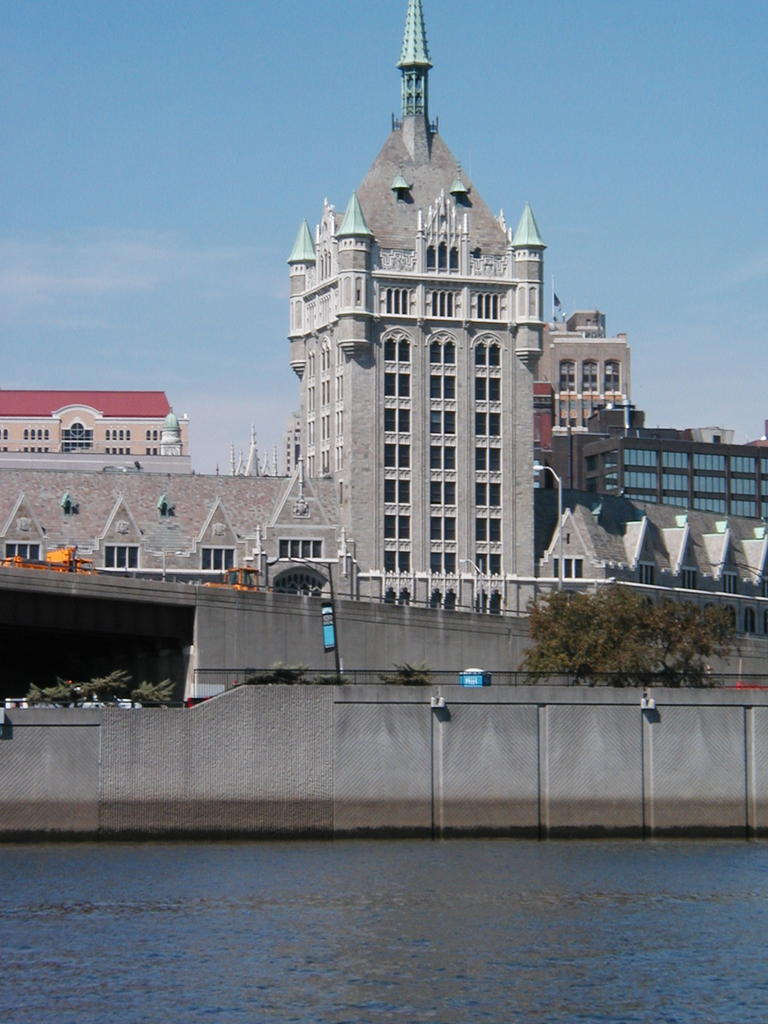
Albany, NY, seen from the river, has an interesting mix of building styles, old and newer. Note the high tide line - we have to pay attention now to tides and (more important) currents.


Along the shores of the Hudson: The river is bordered more often with beaches, and houses are built close by. Many have docks and boats; and there are a lot of marinas and yacht clubs, still mainly filled with power boats.


Looking at moorings, Castleton Boat Club. Castleton boat club is the first stop for many after leaving the locks, the last before for many on their way there; we put our mast up there, in company with several others. The boat in this picture had its mast taken down the next day.


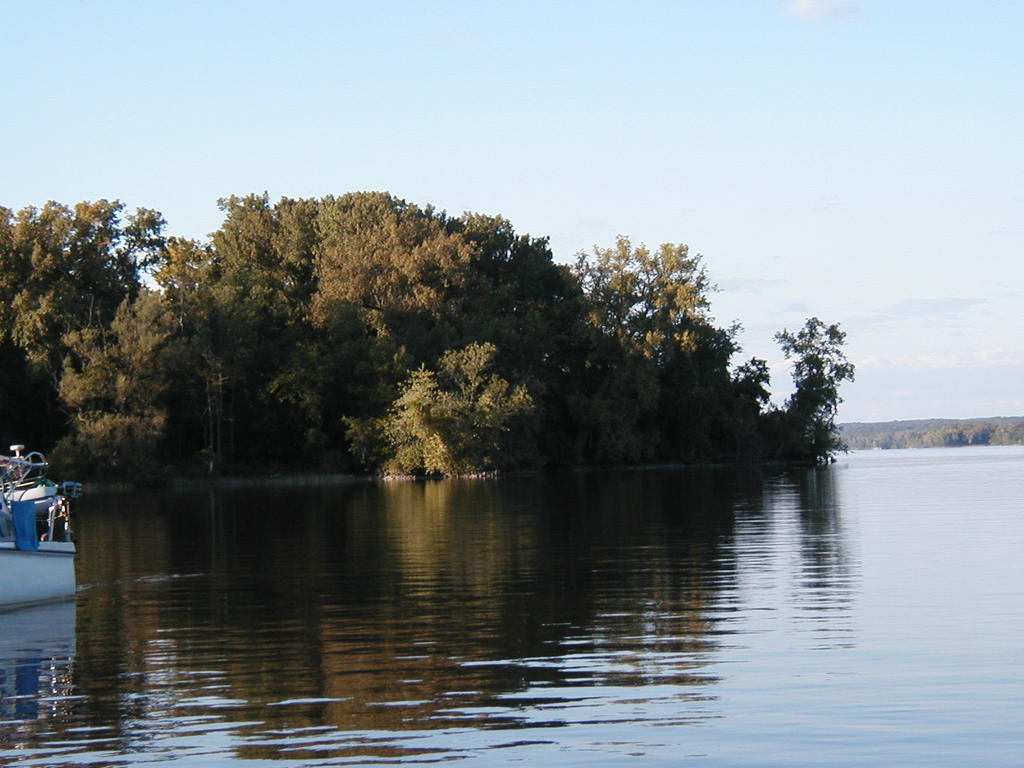
At anchor, Rattlesnake Island. We had been travelling in company with April First for a few days, since we met April and Dean at Lock 11, Erie Canal.


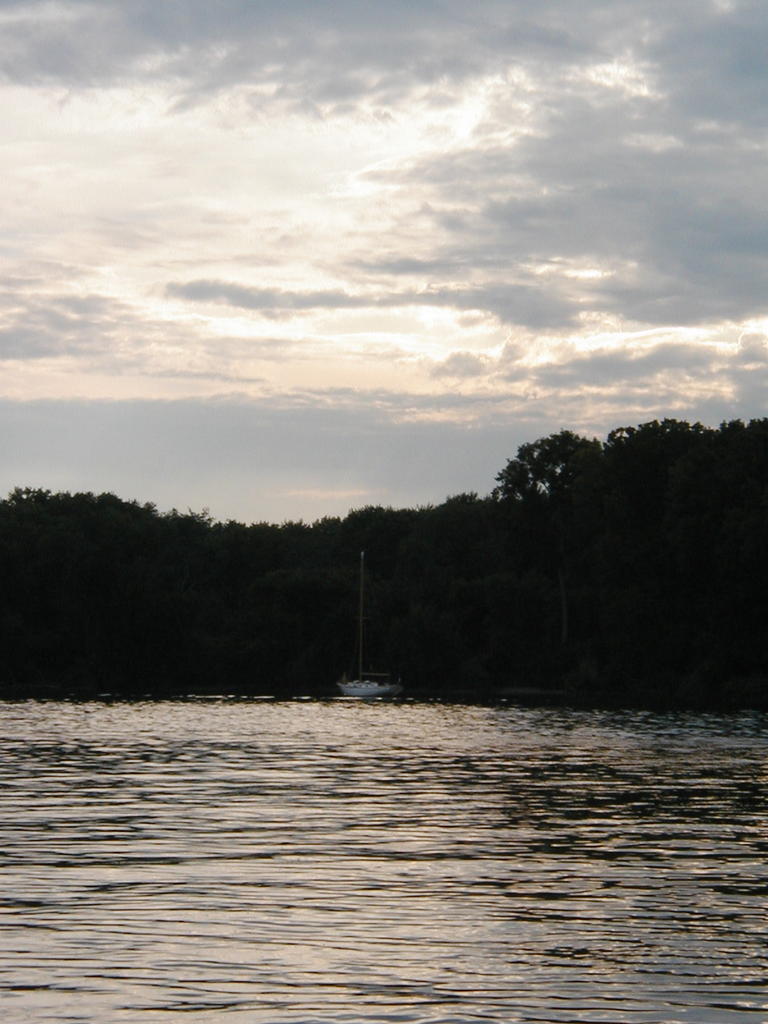
Looking out, Rattlesnake Island Anchorage.


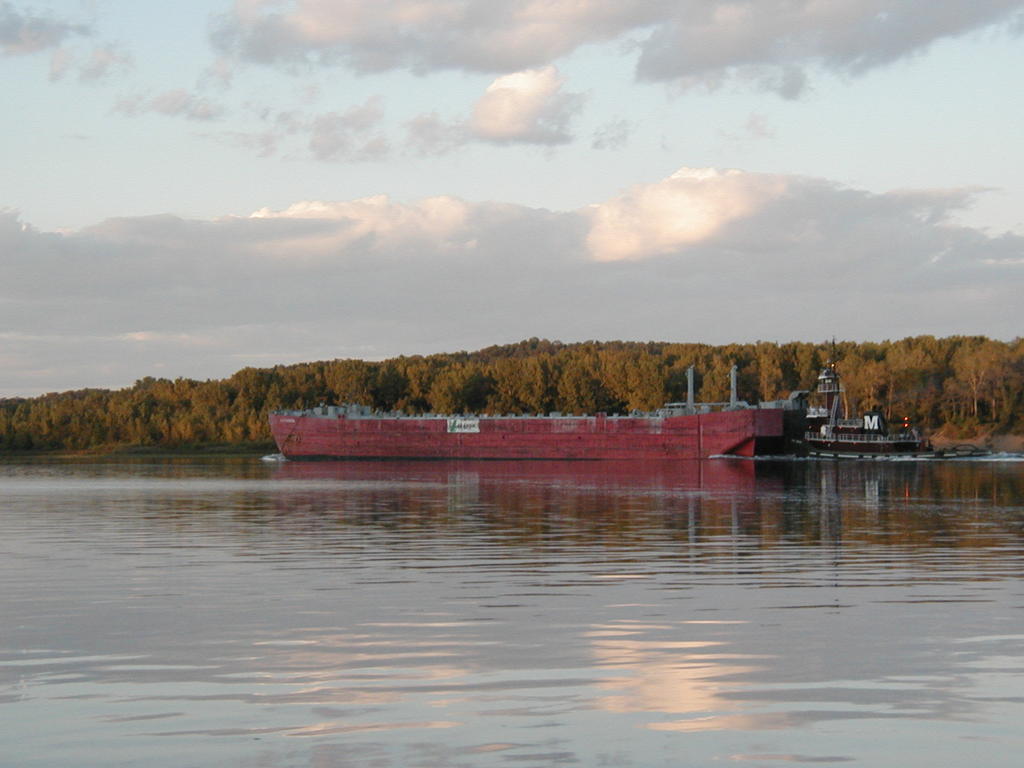
Traffic on the Hudson, looking out from Rattlesnake Island. Most of the traffic we saw, that morning and that evening, was large powerboats and these much larger barges with their tugs.


Tide Coming In, Esopus Creek. In a tiny little anchorage we entered when the tide was low; we watched the sandy banks disappear as the tide came in.


The tide is In. And now the sand banks are completely under water.


Rock Face, Esopus Creek.. It seems wild, but a road ran above the rock face. We watched the rock face too transform as the tide came in.


Now there are hills around. This was taken looking across the river from behind Pelopus Island, where we anchored for a night.


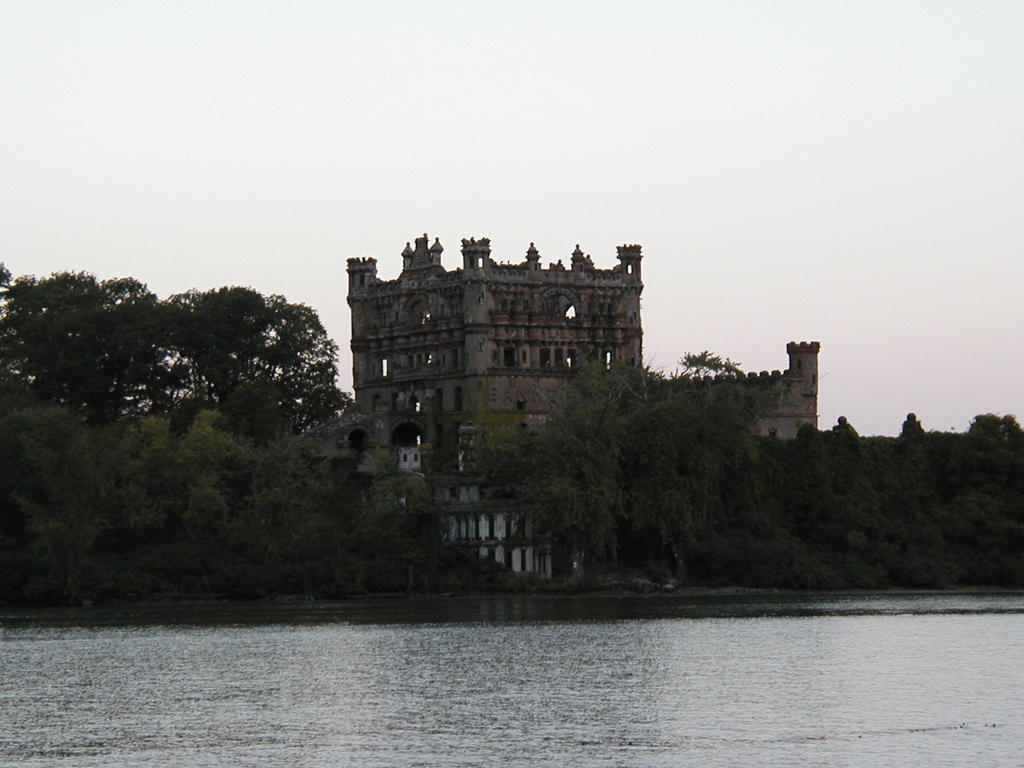
Ruins, Pelopel Island. These castle-like ruins are those of an arsenal, built by a very rich arms dealer who sold both to the British and the Yankees.


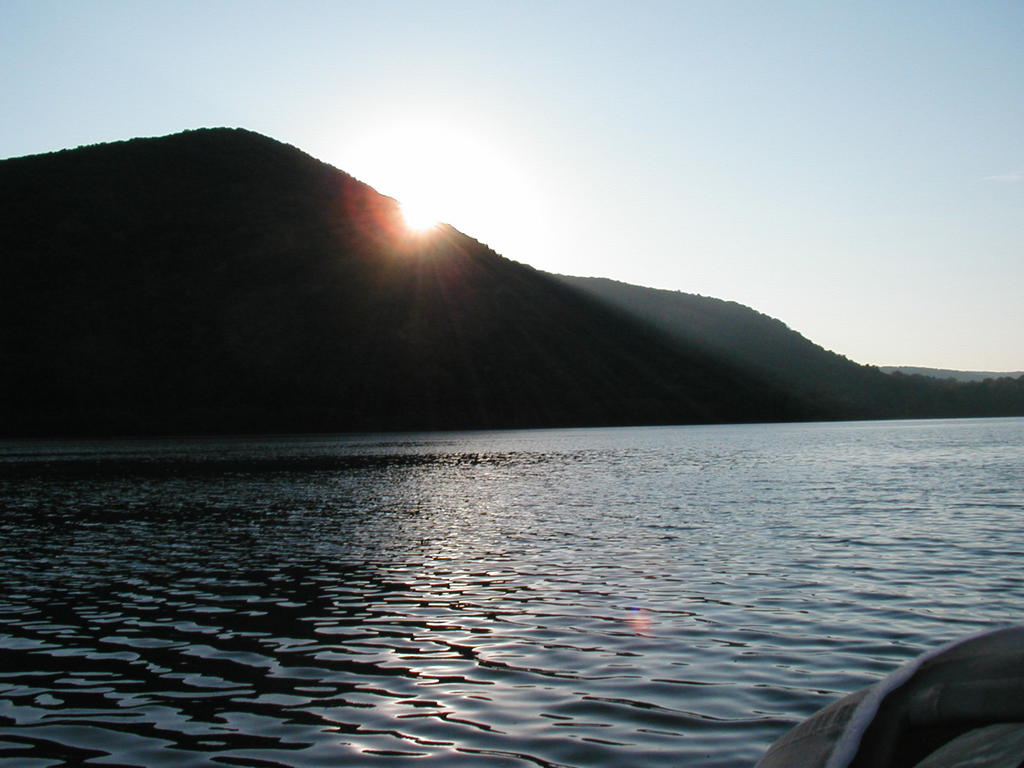
Sunrise, leaving Pelopel Island. Yes, we actually saw sunrise twice - we needed to catch the tide to help us get to our next stop in good time.


The Tappan Zee Bridge. This is an immense bridge, crossing the Hudson River, a main artery and always busy - though shut down when this picture was taken due to a bad accident.


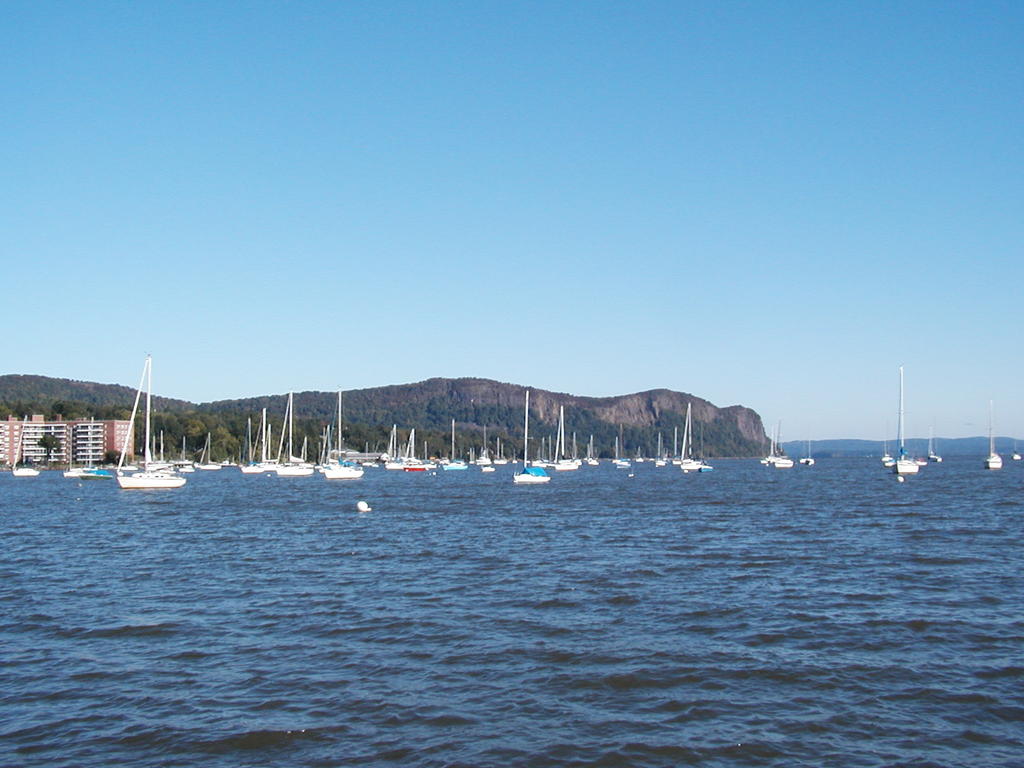
The Mooring Field, Nyack Boat Club. A smoggy day outside New York City - the boats are all lined up facing into the current.


Finally, a clear day! The Nyack Boat Club mooring field - after the smog lifted and the effects of hurricane/tropical storm Ophelia passed.


Enjoying a windy evening. Several boats came out to play, among them this little gaff rigged beauty.


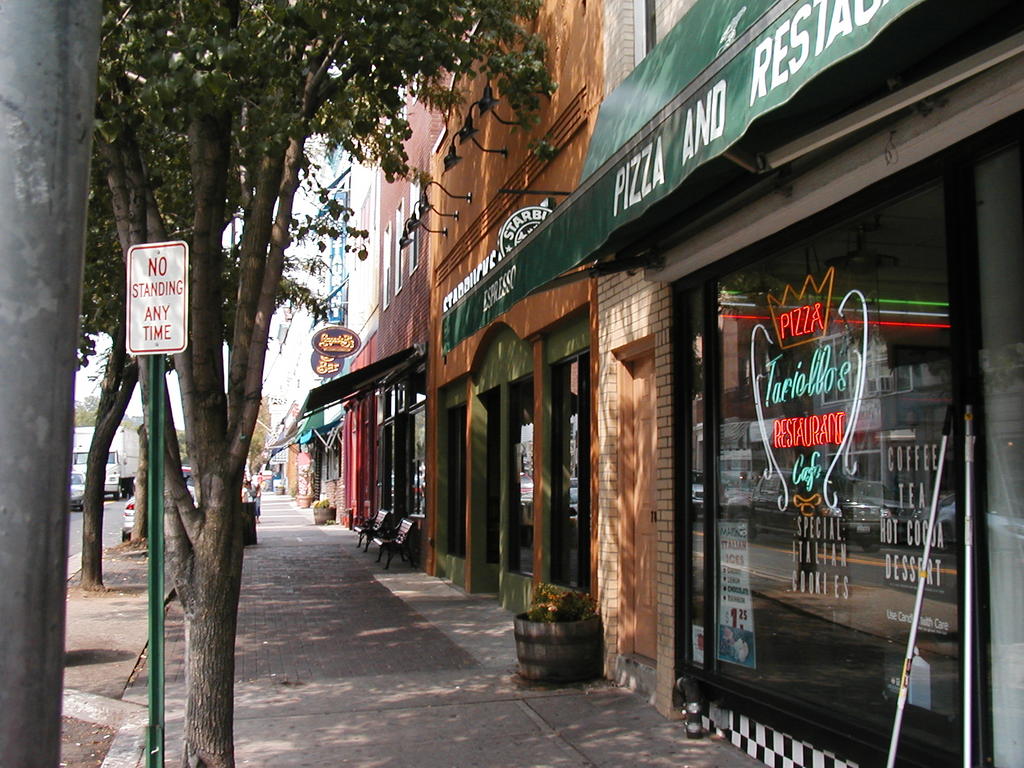
Nyack, New York - Main St. An Italian family's restaurant right next to Starbucks - up the street is an Ace Hardware jammed with all kinds of goods from floor to ceiling. Close by, a greengrocery run by some Chinese. The store behind the benches has very good ice cream...


The high cost of housing in Nyack. I'm sure we could find something better in Toronto for $699,900 - maybe it's the location?


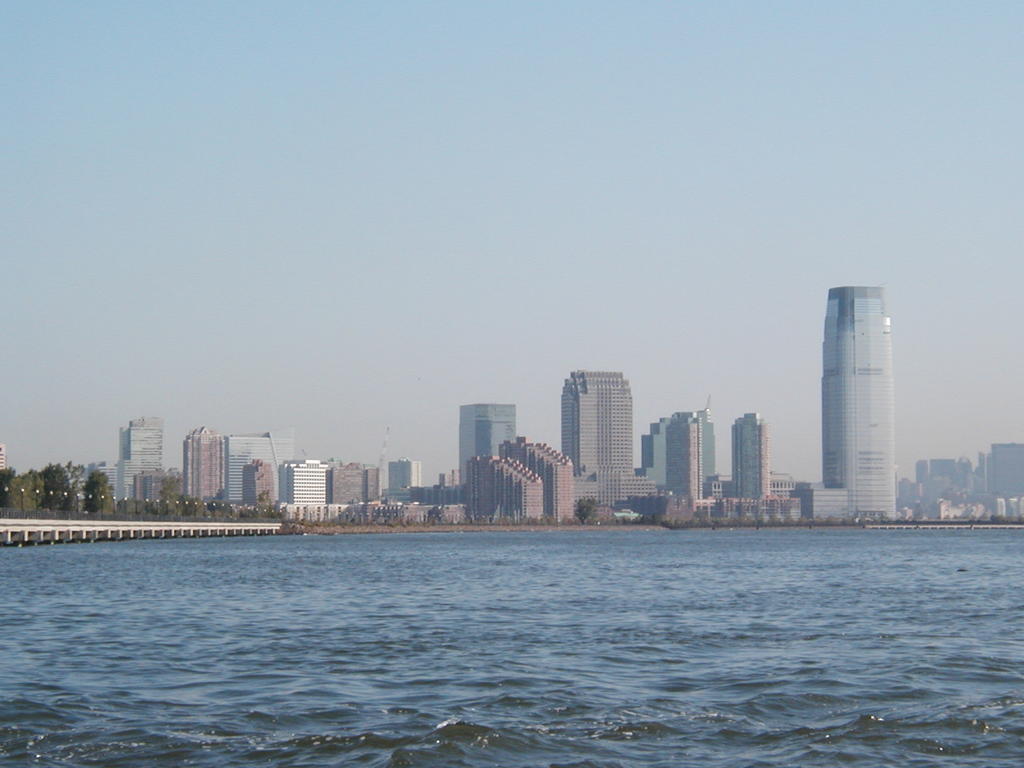
A View of the New York Skyline. A view from Liberty State Park, as we were heading out bound for Sandy Hook, on our way to the Atlantic.


View from Liberty State Park, NYC. The anchorage at Liberty State Park, behind the Statue of Liberty, looks out at some of the New Jersey side real estate.